
The best low profile TV mount sits closer to the wall than standard brackets, so the screen reads as furniture rather than hardware. For homeowners who want a built-in, minimalist look on 42-80″ sets, that thin gap is the point of the purchase, not an afterthought.
Full-motion arms often project 15-25 inches when extended. A slim plate usually holds the panel about 0.5-2 inches off the drywall once seated. This guide covers what “low profile” actually means, how fixed and tilt options differ, and how to choose a low profile TV wall mount that stays safe, cable-friendly, and flush without overbuying thickness or underbuilding capacity.
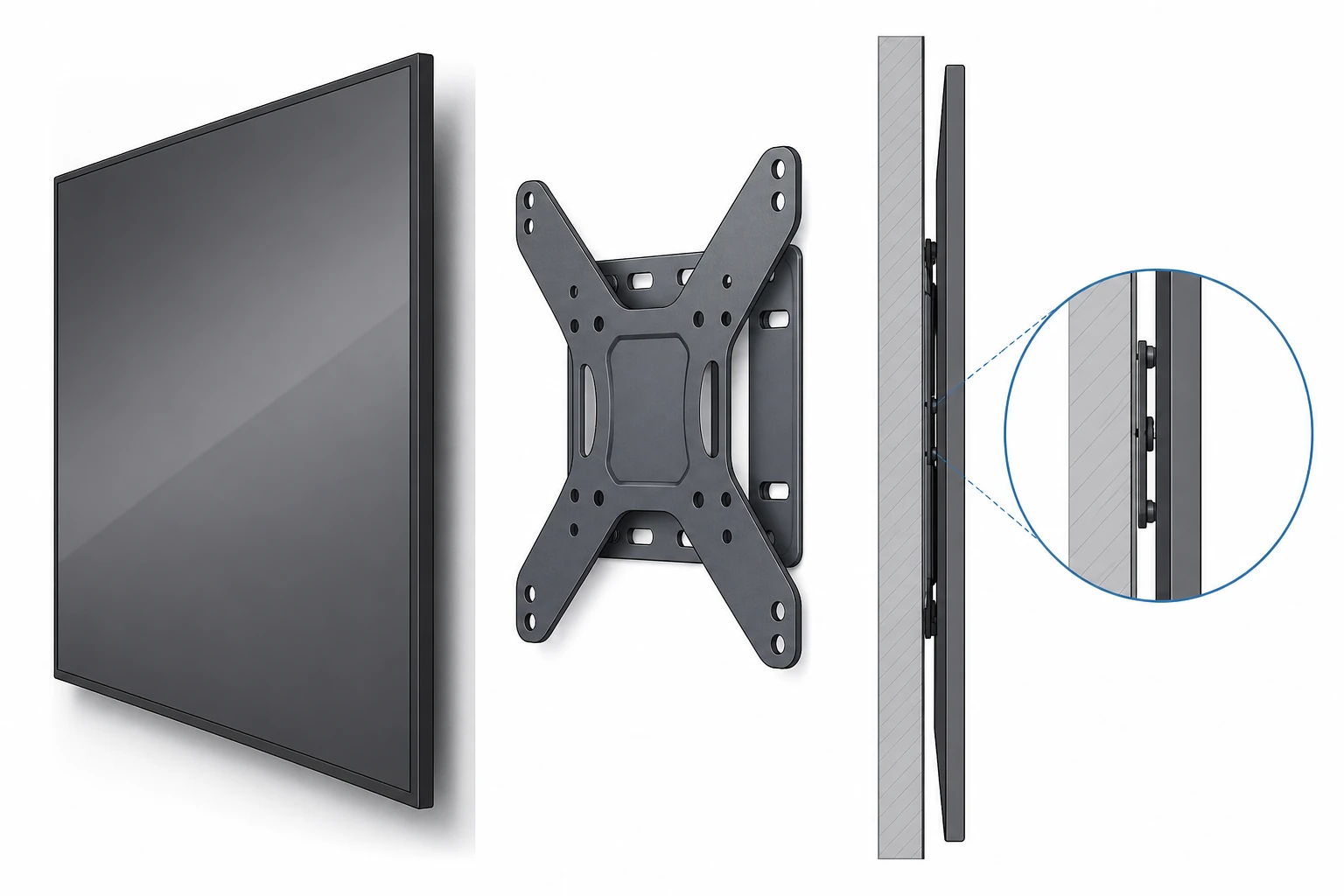
What low-profile mounting actually means
If you are asking what is a low profile tv mount, the answer is about wall clearance, not brand marketing. The hardware drops articulating arms, long pivots, and deep plates so the television can sit almost flush.
Most designs fall into two practical groups:
- Fixed slim brackets for the thinnest install, sometimes under 1 inch when the TV ports allow it.
- Tilting slim brackets that keep a relatively thin body while adding about 5-15 degrees of downward angle for glare control.
You will not swing a true flush mount toward another room. For a primary sofa position that faces one direction, the cleaner line usually matters more than lost swivel range. When the room needs extra facing angles, a “slim articulating” arm is a compromise, not a pure flush solution.
Why a thin profile mount is worth it
Cleaner wall aesthetics
A flush mount look makes modern OLED and QLED panels appear intentional. Minimal bezels already help; a protruding arm undoes that work. In rooms styled around clean geometry, a minimalist tv mount keeps the hardware out of the visual field so the display can sit like a framed panel.
Better use of small rooms
Flush seating frees inches under and around the screen. In smaller rooms, that gap decides whether furniture can sit closer to the wall.
Less visual clutter
Without visible elbows and deep brackets, attention stays on the picture instead of the hardware.
Safer traffic paths
Near-wall hardware leaves fewer objects for kids or pets to bump. The trade-off is service access, so cable and device changes need a plan before hang day.
Types of slim mounts and the clearance they need
Ultra-slim fixed brackets
Fixed models chase the slimmest tv bracket footprint. Premium plates can land under an inch when the TV has side or recessed ports. Rear-facing ports, thick HDMI elbows, or external power bricks may force you thicker than the brochure, so measure the real stack behind the set before chasing sub-inch numbers.
| Feature | Specification |
|---|---|
| Wall clearance | 0.5 – 1.5 inches |
| Adjustment | None |
| Best for | Eye-level installs, one dedicated viewing line |
| Typical price range | $25 – $80 |
Fixed mounts work best when the center of the screen is already near eye level and glare is controlled by room layout, not by angling the panel.
Low-profile tilt mounts
Tilt models preserve a thin body while solving the two most common living-room problems: fireplace height and overhead light bounce.
| Feature | Specification |
|---|---|
| Wall clearance | 1.5 – 3 inches |
| Adjustment | 5-15° vertical tilt |
| Best for | Above-eye-level walls, bright rooms |
| Typical price range | $40 – $120 |
If the set hangs higher than ideal, a tilt-capable slim mount usually beats a pure fixed plate for day-to-day comfort.
Slim articulating options
Some arms advertise as “slim” because they collapse closer than classic full-motion hardware. Retracted depth is often around 2-4 inches, with limited swivel once extended.
| Feature | Specification |
|---|---|
| Wall clearance (retracted) | 2 – 4 inches |
| Adjustment | Limited swivel + tilt |
| Best for | Corners or two seating zones |
| Typical price range | $80 – $200 |
Use these when motion is mandatory. If the goal is the flush, gallery-wall look, fixed or tilt still wins.
How to choose the right thin mount
1. Measure clearance behind the TV first
Before buying any thin tv wall mount, check:
- Power plugs and outlet location
- HDMI, optical, and Ethernet connectors
- Depth of soundbar sync boxes or streaming sticks
- Rear ventilation needs on the television itself
Most panels with rear ports need about 1-2 inches minimum. The mount can be thinner than that stack; the usable wall gap is dominated by cables and adapters.
2. Confirm VESA pattern
Common patterns by size:
| TV size | Common VESA patterns |
|---|---|
| 32-50 inch | 200×200, 400×200 |
| 50-65 inch | 400×400, 600×400 |
| 65-85 inch | 400×400, 600×400, 800×600 |
Universal plates cover a range, but the holes on your specific panel remain the filter. Match both pattern and screw type.
3. Build a real weight safety margin
Thin does not mean light-duty when the steel is well formed. Still rate the bracket for at least 1.5x the TV’s weight:
- Many 55″ sets: about 30-45 lb
- Many 75″ sets: about 60-90 lb
If the label is close to the TV’s weight with no margin, step up a class.
4. Plan stud hit and horizontal travel
Narrow wall plates leave less forgiveness than wide full-motion plates. Locate studs first, then pick a plate with enough lateral room if the studs do not line up with the desired screen center. Do not rely on drywall anchors alone for a flush living-room TV.
Once a low profile TV wall mount is on the studs, the set should sit flat enough that side gaps and shadows disappear. Route and seat every cable before final hang, because rear access shrinks hard after the panel lands.
Product route for true flush installs
Homeowners chasing a real near-wall result should care more about plate flatness and finish consistency than brochure depth claims. ThunderTech Pros manufactures its mounting hardware in its own ISO 9001:2015 certified factories, with 17 years of production experience across TV mounts, monitor arms, and AV mounting solutions.
Browse fixed and tilt plates on the ThunderTech Pros English site when you need slim wall hardware rather than deep articulating arms.
Fixed options
- CF44 / CF64 fixed wall mounts: ThunderTech Pros thinnest fixed route for a true flush body on larger living-room screens. Steel plates are built to stay flat so warp does not show in an under-one-inch class gap.
- DF44 / DF-SL fixed mounts: useful when stud layout needs a different attachment footprint while staying thin.
Tilt options
- CT44 / CT64 tilt mounts: about 12-15° of tilt with a still-thin body for fireplace or high installs.
- DT44 / DT-SM tilt mounts: similar thin-tilt behavior with alternate VESA coverage for mid-size panels.
Why tolerance matters more on slim mounts
A plate six inches off the wall can hide minor bow. A flush mount under two inches cannot. Vertically integrated production, from steel through powder coat, keeps flatness and finish steadier unit to unit across China and Thailand plants.
When to stay fixed:
- Eye-level screen
- One main sofa line
- You want the absolute thinnest stack
When tilt is the better “best” choice:
- Screen is high or over a fireplace
- Windows or cans bounce light into the panel
- Viewers sit closer than ideal eye line
In other words, the best low profile TV mount for your wall is the thinnest option that still clears cables, hits studs, and angles the picture correctly, not automatically the shortest published depth number.
Installation sequence that protects the flush mount look
- Plan cable management before holes. Options: in-wall conduits where code allows, painted raceways, recessed outlet kits inside the TV footprint, wireless HDMI for distant sources. The cleanest installs hide receptacles fully behind the panel.
- Use a laser level. On slim plates, a one-degree skew is obvious from the sofa.
- Dry-fit cable access. Hold the TV on the plate before final locking so ports stay reachable. Many thin plates force “cables first, hang second.”
- Check wall flatness. Run a straightedge. Shim minor humps so the plate does not rock.
Mistakes that undo a thin install
- Chasing zero clearance. A sub-inch plate is useless if the power brick or HDMI elbow needs 1.5 inches.
- Ignoring glare. Fixed looks cleaner until afternoon sun washes the screen; then tilt pays for itself.
- Skipping stud verification. Concentrated load on a narrow plate punishes floating anchors.
- Blocking future service. Leave a servicing plan if you swap soundbars or consoles often.
Frequently Asked Questions (FAQ)
What is a low profile TV mount?
It is a wall bracket built to hold the television about 0.5-2 inches from the wall instead of on deep articulating arms. By removing long pivots, it creates the flush mount, built-in look people want from a minimalist tv mount setup.
Can I use a thin mount above a fireplace?
Yes, with a tilt model rather than a pure fixed plate when the screen sits high. ThunderTech Pros CT44 and CT64 style tilt plates keep a thin body while offering roughly 12-15° of downward angle so the picture faces the seating line.
How close can the TV actually get?
Ultra-slim fixed plates can land near 0.5-1.5 inches. Port depth, connector heads, and heat clearance often set a practical floor around 1-2 inches. Measure the TV’s rear stack before insisting on the absolute slimmest tv bracket on paper.
Do these mounts work for 75″ and larger sets?
Yes if VESA and capacity match. A large 75″ panel is often in the 60-90 lb range, so pick a plate rated for at least 1.5x that mass. ThunderTech Pros fixed and tilt plates use heavy-gauge steel for large formats while holding the flatness a flush install needs.
Fixed or tilt: which is the better low profile TV mount for most living rooms?
Choose fixed when the center line is already near eye level and lighting is controlled. Choose tilt when the screen is high, the room is bright, or viewers sit low relative to the panel. Either path can still look slim; tilt is the more flexible everyday answer for mixed living rooms.
Choose the thin install that matches the room, not the brochure copy
A successful near-wall install starts with clearance math, VESA and weight margin, then stud layout. After those gates, fixed and tilt plates from a manufacturer that controls steel flatness would beat a slightly thinner plate with poorer tolerances. ThunderTech Pros manufactures its mounting hardware in its own ISO 9001:2015 certified factories, with 17 years of production experience across TV mounts, monitor arms, and AV mounting solutions. If you need a best low profile TV mount path for a 42-80″ living-room panel, match the plate style to seating height first, then pick the thinnest safe clearance your cables allow.