
A retail buyer usually meets this category from the shelf side first. There is space for a small mounting range under your own brand, a rough idea of the price bands the channel expects, and a clear view of how the box should look. What does not exist yet is a written product definition: which screen sizes each SKU covers, which motion form sits at which tier, what goes inside the carton, and which documents the programme will ask a supplier to produce. Starting from that gap can produce quotes and samples that cannot be compared with each other, because every factory fills the blanks differently. The route question, existing ODM design or a drawing-led OEM development, is downstream of that definition rather than upstream of it. This article walks through how to settle the route, build the SKU brief, verify the product and its evidence, and hand a frozen specification over to production.
Decide ODM or OEM From Your Retail Programme, Not From the Label
ODM and OEM are often treated as two supplier types. In practice they describe who owns the product definition. In an ODM route you select from designs a manufacturer already produces and adapt the surface layer: brand marks, colour, packaging, manual, barcode and assortment structure. In an OEM route the design intent comes from your side as a drawing or a functional requirement, and the manufacturer engineers and tools against it. The trigger for choosing between them is not preference. It is whether an existing product form already satisfies the mechanical and commercial requirements of the range you are trying to put on shelf.
Signals That an Existing Product Form Is Enough
The ODM route fits when your differentiation lives in the brand layer rather than in the mechanism. Typical signals:
- The tiers you want to sell map onto standard mounting behaviours: fixed, tilt, and full motion.
- Screen coverage and mounting pattern requirements can be met by product families a manufacturer already builds.
- Your specific asks concern the carton, artwork, manual language, hardware presentation and labeling rather than load path or geometry.
The consequence of taking this route is that you inherit a defined product, which makes the specification conversation concrete much earlier. The trade-off is that the same underlying form may exist elsewhere in the market, so your position has to be built through assortment, packaging, instructions and after-sale material rather than through a unique mechanism.
Signals That the Range Needs an OEM Discussion
A drawing-led route becomes relevant when the requirement touches the product itself, not its presentation. Watch for these:
- A dimensional constraint that no standard form satisfies, for example a specific depth from wall, an unusual arm reach, or an installation interface tied to a fixture programme.
- A mechanical behaviour you want to own, such as a distinct articulation or a bespoke adjustment feature.
- An intention to hold the design as your own property across suppliers over time.
The consequence is a longer and more technical front end. Someone has to author the drawing, agree tolerances and materials, and take responsibility for revisions. That work is real regardless of which factory eventually builds the part, and it is the reason an OEM decision should be made deliberately rather than as a reflex to the word “custom”. Where the requirement is genuinely presentational, forcing it through a drawing route adds engineering overhead without adding shelf value.
Build the SKU Brief Before You Contact Factories
The single most useful document a retail brand can produce before sourcing is a per-SKU brief. It converts a shelf plan into something a manufacturer can respond to precisely, and it is what makes multiple responses comparable.
What Belongs in the Brief
Treat each line of the range as its own record rather than describing the range as a whole:
- Screen coverage and mounting pattern. The screen size band and the mounting hole pattern each SKU is intended to serve. These two together define which product families are even candidates.
- Motion form and adjustment. Fixed, tilt, or full motion, and which adjustments you want the end user to have.
- Load intent. The weight class the SKU is meant to address, stated as a requirement you are asking the supplier to confirm against a specific model rather than as an assumption.
- Pack contents and presentation. Hardware pack scope, manual format and languages, inner packing, carton graphics, and the labeling and barcode structure your channel uses.
- Documentation scope. Which drawings, specification sheets, sample stages and reports you want in scope for this programme. Define this yourself instead of assuming a standard bundle exists; document scope is agreed per programme, not inherited.
Why an Incomplete Brief Makes Quotes and Samples Incomparable
When a brief leaves a field open, each supplier resolves it in the direction that suits their existing production. One response may assume a lighter hardware pack, another a different carton construction, another a different finish. The numbers that come back then differ for reasons that have nothing to do with supplier capability, and the sample you receive answers a question you did not ask. The practical fix is unglamorous: freeze the fields you can, mark the ones you are genuinely open on as open, and ask every candidate to respond against the same record. Where you are undecided, say so explicitly and ask the manufacturer to propose an option with its consequence stated, which keeps the comparison intact.
Verify the Physical Product and the Evidence Behind Each Candidate SKU
Once candidates exist, verification is about tying a specific physical thing to a specific record. Two failures are common: approving a sample that is not traceable to a revision, and approving artwork against a carton that is not the production carton.
Specification and Drawing Revision
Ask for the product specification and the drawing or model revision identifier for the exact SKU under discussion, and record it against your own line item. Every later approval, sample, artwork proof and inspection reference should point back to that identifier. Without it, a change made in good faith between sample and production has nothing to be measured against, and disputes become a matter of memory rather than record.
Samples, Documents and Packaging Artwork
Handle these as three separate approvals with three separate confirmations:
- Samples. Define what each sample stage is meant to prove, whether that is fit and finish, assembly experience, or packed presentation. A sample sent without a stated purpose usually gets approved for the wrong reason.
- Documents. Agree in writing which reports or certificates are in scope for your SKU, who arranges them, and to which model and revision they refer. Do not assume that documentation associated with one model carries across to another, and do not assume any document is automatically included in a quotation.
- Packaging artwork. Approve artwork against the actual carton dimensions and construction for the production pack, with barcode, labeling and manual content checked as part of the same approval rather than afterwards.
The point of this discipline is that it moves risk from the reorder, where it is expensive, to the pilot, where it is cheap.
Where a Mount Manufacturer Fits Once the Product Form Is Defined
With a brief in hand, the conversation with a factory becomes technical instead of exploratory. This is the stage where existing product families are genuinely useful, because they let you test your assumptions against something that already exists in production rather than against a concept.
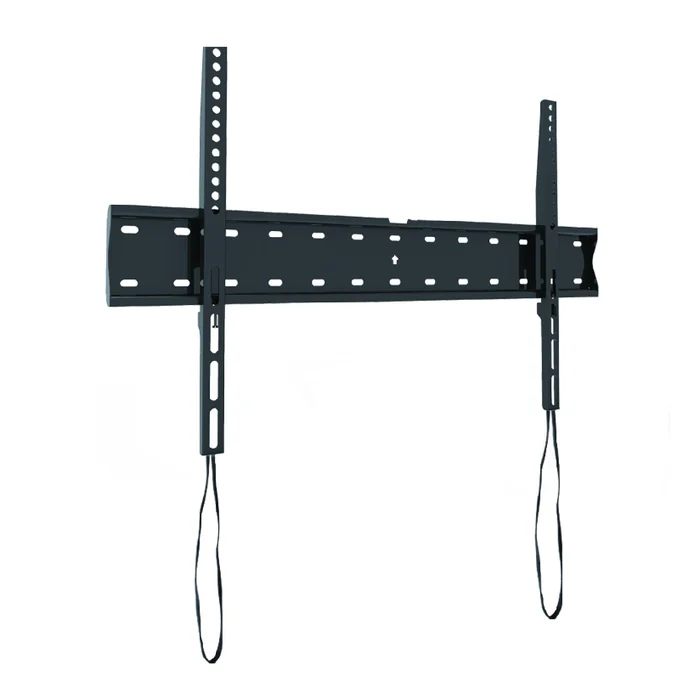
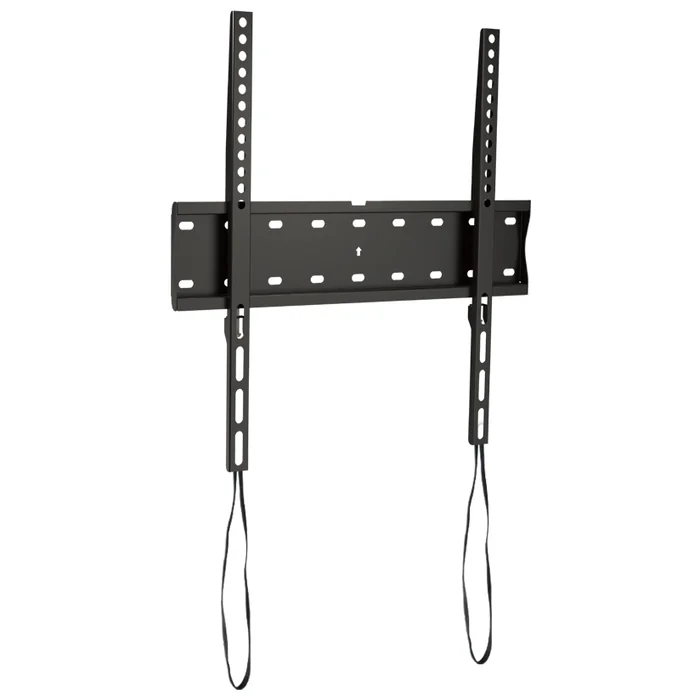
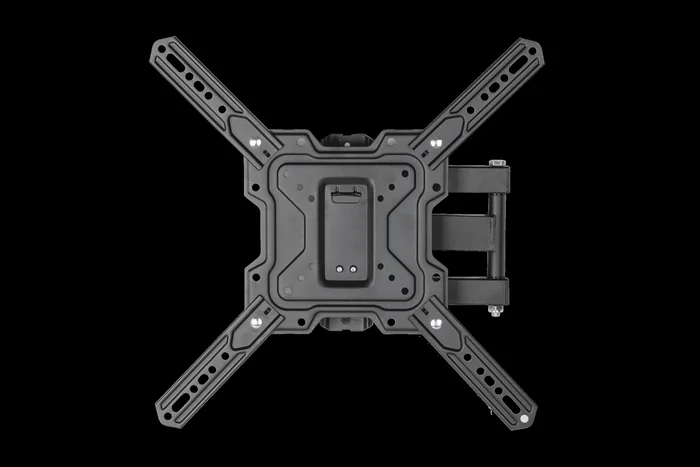
ThunderTech Pros manufactures in this category, and its published product range spans TV mounts and monitor products. If your tiers resolve towards a simple, close-to-wall presentation, the fixed wall mount family is the reference point to review. If a tier calls for articulation, an existing production form such as the full motion TV wall mount 340EX shows what a defined full-motion product looks like as published, which is a more useful starting point than an abstract description of “an articulating arm”. General manufacturing context is published on the company page and is best read as background rather than as a statement about any particular programme.
What a manufacturer contributes at this point is a feasibility reading against your actual brief: whether an existing form matches the coverage and mounting pattern you described, what would have to change if it does not, which parts of your pack and labeling request are straightforward against a given model, and what still has to be confirmed in writing before anything is treated as agreed. Nothing about a supplier’s published range, product page or facility content should be read as a commitment for your SKU. Anything that matters commercially, from product form and revision to pack contents, documentation scope, quantities and delivery arrangements, is confirmed programme by programme.
Freeze the Pilot-to-Order Handoff
The transition from an approved pilot to a running order is where most avoidable cost enters. Before the handoff, get these items written down and confirmed by both sides:
- Drawing or model revision. The exact identifier that production will build to, with a stated process for any change.
- Colour and branding approval. Finish reference, logo placement and any printed or applied marks, approved against a physical reference rather than a screen image.
- Hardware pack. The complete contents list, including fasteners, spacers and any accessory items, with the pack presentation format.
- Documentation. The agreed set of documents and reports in scope, with the model and revision each one refers to.
- Packaging and labeling. Approved artwork, carton construction, inner packing, and the label and barcode structure per SKU.
- Order and delivery request. Quantities per SKU and your delivery request, both raised as requests to be confirmed rather than as assumptions carried over from the pilot.
A frozen list of this kind also makes a later sourcing round more manageable. When another manufacturer must review the programme, the record reduces how much of the brief has to be reconstructed before a meaningful comparison can begin.
Retail-Brand Questions About ODM TV Wall Mounts
Can we put our own brand on an existing mount design instead of developing a new one?
That is the normal shape of an ODM discussion: the mechanism comes from an existing product form and your side defines the brand layer, packaging, manual and labeling. What can actually be changed on a given model, and how, has to be confirmed against that specific model rather than assumed across a range. The practical step is to identify a candidate product form first, then raise your branding and pack requirements against it.
What should we send a factory in a first enquiry about a private-label TV mount range?
Send a per-SKU brief rather than a general description of the range. For each line, state the screen coverage and mounting pattern, the motion form, the load class you need confirmed, your pack and labeling requirements, and which documents you want in scope. If a field is still open, mark it as open and ask for a proposal with its consequence explained, which keeps responses from different suppliers comparable.
How do we know a sample matches what will actually be produced?
Tie every sample to a specific drawing or model revision identifier and record that identifier on your own line item. State what each sample stage is meant to prove, and approve packaging artwork against the production carton construction rather than against a rendering. If the revision changes at any point, treat previous approvals as needing to be revisited rather than carried forward.