Getting a product manufactured is only half the battle. If you sell physical goods through retail channels or e-commerce fulfillment centers, your product needs to arrive in retail-ready packaging that meets strict requirements. Damaged boxes, missing inserts, incorrect labels, or poor presentation can lead to chargebacks from retailers, negative customer reviews, and lost sales.
An assembly line packaging service takes your finished products and prepares them for the shelf or the shipping box. This guide covers what these services include, how to evaluate providers, and why manufacturers with in-house packaging capabilities offer significant advantages.
What “Retail-Ready Packaging” Actually Means
Retail-ready packaging (RRP) is product packaging designed to go directly from the shipping carton onto the retail shelf or into a fulfillment center with minimal handling. Different sales channels have different requirements:
Amazon FBA: Products must have scannable barcodes (UPC or FNSKU), be packaged so they cannot be damaged during warehouse handling, and meet specific labeling and poly-bag requirements depending on the category. Oversized or fragile items need additional protection.
Big-box retailers (Walmart, Costco, Lowe’s): These retailers often require shelf-ready packaging that looks professional, includes all regulatory markings, and comes in case packs that match their shelf planogram. Some retailers also require specific pallet configurations and EDI-compliant shipping labels.
Direct-to-consumer (Shopify, brand website): The unboxing experience becomes part of your brand. Packaging needs to protect the product during shipping while also looking good when the customer opens it. Custom inserts, branded tissue paper, and printed instruction cards all contribute to perceived value.
Regardless of channel, your packaging needs to protect the product, present it professionally, and comply with the destination’s labeling and handling requirements.
What Assembly Line Packaging Services Include
A dedicated packaging service or a manufacturer with in-house packaging typically offers:
Product inspection and sorting: Before packaging, each unit is inspected for defects. Scratched surfaces, misaligned parts, missing hardware, or cosmetic issues are caught before the product goes into the box.
Component kitting: Your product probably comes with accessories: mounting hardware, hex keys, instruction manuals, cable ties, or VESA adapter plates. The packaging line assembles all components into the correct kit configuration so the customer receives everything they need.
Box assembly and insertion: Products are placed into their retail boxes with foam inserts, molded pulp trays, or corrugated dividers that hold everything in position during transit. The packaging line ensures consistent placement every time.
Labeling: Barcodes, UPC codes, weight labels, country-of-origin markings, safety warnings, and retailer-specific labels are applied. For Amazon FBA, FNSKU labels need to be placed in specific positions on the packaging.
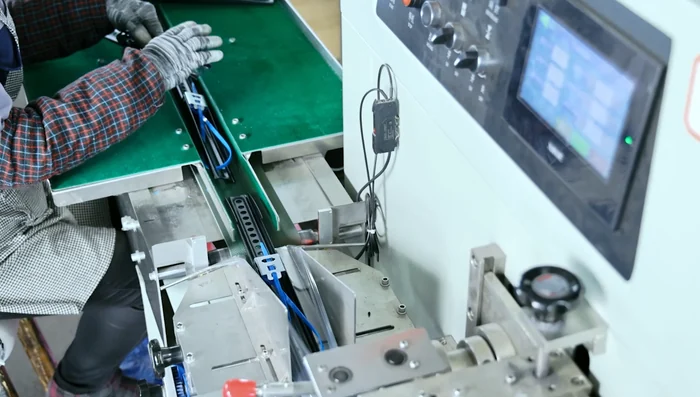
Shrink wrapping or poly bagging: Some products require an outer poly bag or shrink wrap for dust protection and tamper evidence. The packaging line handles this at scale with heat-seal equipment.
Case packing and palletizing: Finished units are packed into master cartons in the correct quantities (case pack size), labeled with carton markings, and stacked onto pallets according to the buyer’s specifications.
Why In-House Packaging at the Factory Is Better
You have two main options for assembly line packaging:
Option A: Third-party packaging service. Products ship from the factory to a separate packaging facility, where they are unpacked, inspected, packaged, and re-shipped to the retailer or fulfillment center.
Option B: Factory-integrated packaging. The manufacturer handles packaging on the same production line, right after assembly and quality control. Products go from the production floor directly into retail-ready boxes.
Option B is almost always better for cost, quality, and speed. Here is why:
Fewer touchpoints: Every time a product is loaded, shipped, unloaded, and repackaged, there is a risk of damage and additional cost. Factory-integrated packaging eliminates one full shipping and handling cycle.
Faster turnaround: No waiting for products to arrive at a separate facility. Packaging happens immediately after production, shaving days or weeks off your total lead time.
Better quality control: The same team that manufactured the product inspects and packages it. They know what to look for because they built it. A third-party packager may not catch subtle defects that a factory QC team would.
Lower cost: You are not paying for separate warehousing, handling labor, and shipping to a packaging facility. The factory’s packaging line is already built into their production cost structure.
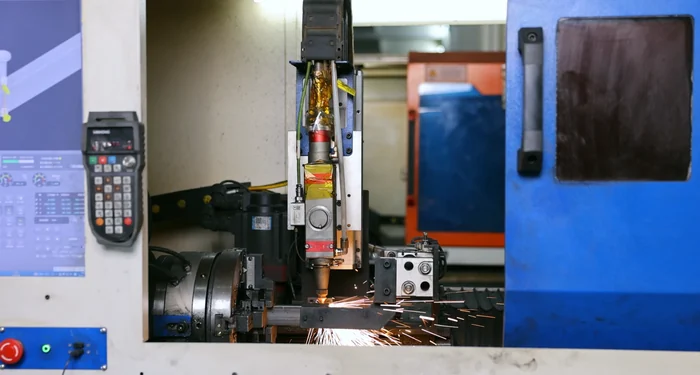
ThunderTech Pros operates ten high-speed packaging lines within their 45,000-square-meter vertically integrated facility. Products move from laser cutting, stamping, welding, and powder coating directly into packaging without leaving the factory. This setup means a TV mount or monitor arm goes from raw steel to retail-ready box under one roof, with quality control at every stage.
Key Factors When Evaluating Packaging Partners
Whether you choose a factory with in-house packaging or a standalone packaging service, evaluate these factors:
Packaging Design Capability
Can the provider design your retail packaging from scratch, or do you need to supply print-ready artwork? The best partners offer structural design (box dimensions, insert layout, material selection) and graphic design (branding, product photos, regulatory text placement) as part of the service.
ThunderTech Pros includes custom packaging design as part of their ODM service, so e-commerce brands and retailers get packaging tailored to their branding without hiring a separate design agency.
Material Quality
Packaging materials affect both protection and perception:
Corrugated cardboard: Standard for shipping boxes. E-flute for retail display boxes, B-flute or BC-flute for shipping protection. Double-wall corrugated for heavy items like TV mounts.
Foam inserts: EPE (expanded polyethylene) foam is the most common for electronics and hardware. It provides cushioning and holds components in position. Molded pulp is an eco-friendly alternative gaining popularity.
Printed retail boxes: Offset or digital printing with matte or gloss lamination. The box needs to survive warehouse handling without scuffing or tearing.
Compliance and Labeling Accuracy
Packaging errors are expensive. A misplaced barcode can get your shipment rejected at an Amazon fulfillment center. A missing safety warning can trigger regulatory issues. Your packaging partner needs rigorous quality checks on every label, barcode, and regulatory marking.
Scalability
Can the packaging line handle your volume peaks? If you run a Prime Day promotion and need to ship 5,000 units in a week, can your partner keep up? Factories with automated packaging lines and large floor space, like ThunderTech Pros with their AGV-equipped production facility, handle volume spikes more reliably than small manual operations.
Packaging Requirements by Channel
Amazon FBA
– FNSKU barcode on each unit (covers any existing UPC)
– Poly bag with suffocation warning if the bag opening exceeds 5 inches
– No excessive packaging that wastes warehouse space
– Master cartons labeled with shipment ID and item count
– Products must survive a 3-foot drop test in their packaging
Walmart / Target / Lowe’s
– Shelf-ready display packaging for in-store items
– Case pack quantities matching the retailer’s planogram
– EDI-compliant GS1-128 shipping labels on master cartons
– UPC barcodes registered with GS1
– Country of origin clearly marked
Direct-to-Consumer
– Branded outer box or mailer
– Protective inner packaging (foam, air pillows, or molded inserts)
– Printed inserts: thank you card, setup guide, warranty registration
– Easy-open design that does not require tools
– Packaging that photographs well for social media unboxing
Cost Considerations
Packaging costs for hardware products like monitor mounts and TV brackets typically include:
Tooling (one-time): Custom foam mold, printing plates, and die-cut templates. Expect $500-$3,000 depending on complexity. This cost is amortized over production runs.
Materials (per unit): Corrugated box, foam inserts, printed manual, hardware bags, labels. For a typical monitor arm, packaging materials run $1.50-$4.00 per unit depending on quality level.
Labor (per unit): If packaging is integrated into the factory line, labor is built into the product cost. Standalone packaging services charge $0.50-$2.00 per unit for kitting, insertion, and sealing.
Printing: Full-color printed retail boxes add $0.30-$1.50 per unit depending on box size, print coverage, and finish (matte, gloss, spot UV).
Working with a vertically integrated manufacturer that includes packaging in the production process typically saves 15-25% compared to using a separate packaging service, because you eliminate the intermediate shipping, warehousing, and handling fees.
Frequently Asked Questions
Can my manufacturer handle Amazon FBA labeling?
Most experienced manufacturers can apply FNSKU labels and comply with Amazon packaging requirements. Provide your FBA shipment labels and requirements before production starts so they can be incorporated into the packaging line setup.
How do I test packaging durability before a large order?
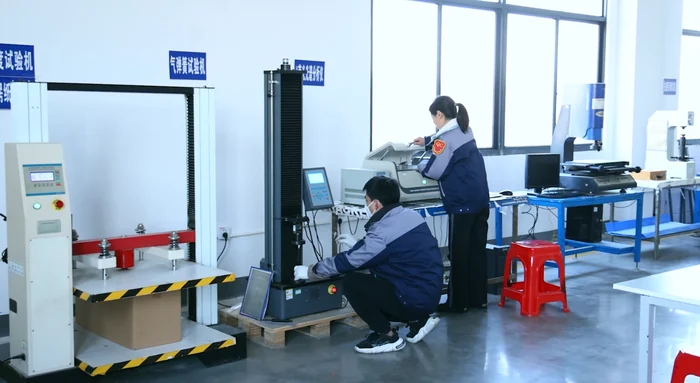
Request packaging samples and conduct drop tests yourself. Drop a packaged unit from 3 feet onto each face, edge, and corner. Open it and check for damage. If the product survives intact, the packaging design is adequate for standard shipping.
What if my retailer changes packaging requirements mid-order?
This is common. Choose a packaging partner who can make label and insert changes quickly without halting the entire line. Factories with digital printing capabilities can switch artwork faster than those relying solely on offset printing.
Is sustainable packaging worth the extra cost?
Increasingly, yes. Consumers and retailers are both moving toward reduced-plastic packaging. Molded pulp inserts, FSC-certified cardboard, and soy-based inks cost slightly more but can be a brand differentiator, especially for environmentally conscious e-commerce shoppers.
Conclusion
The best assembly line packaging service for retail-ready boxes is one that integrates tightly with your manufacturing process. Vertically integrated manufacturers like ThunderTech Pros, with in-house packaging lines running alongside production, deliver lower costs, faster turnaround, and better quality control than separate third-party packagers. Their facility handles everything from raw material processing through to retail-ready cartons, which means your monitor mount or TV bracket arrives at the warehouse ready to sell.
Whether you are launching on Amazon, pitching to big-box retailers, or shipping direct to customers, get your packaging specifications locked in early, validate with samples, and choose a partner who can scale with your growth. For related sourcing guidance, see our article on finding sourcing agents for Asian manufacturing.