
A recurring request arrives from display brands and retail programs: an existing mount or arm is already selling, the buyer now wants to know whether that same part can be built on a Thailand route, and the message asks for a yes or a no before any drawing is attached. The question is reasonable, but it cannot be answered at the level of a company. It has to be answered at the level of a specific SKU, in a specific revision, with a specific finish and packing scheme. ThunderTech Pros works as a video-display mounting OEM and ODM manufacturer with operations in China and Thailand, and the honest reply is that our team can confirm a route only once we have reviewed what the part actually is and what the program actually requires.
Why route confirmation happens per SKU, not per program
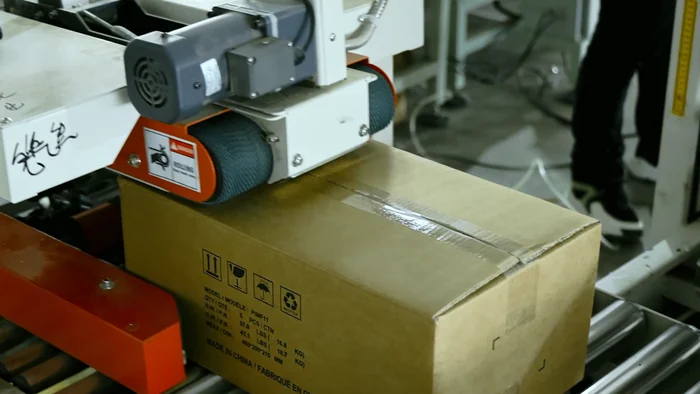
Buyers often treat a production location as a program-wide setting, when in practice it behaves as an attribute of each part. Two mounts sold under the same brand family can carry different plate geometries, different bracket forms, different fastener kits, different finishes, and different retail packaging. Each of those differences touches a different part of the manufacturing chain, so each can pull the same nominal request in a different direction. A drawing revision matters here more than most RFQs assume: if the revision on the buyer’s side is not the revision behind the parts currently shipping, then any route discussion is being held about a part that does not exist yet, and the answer will change once the correct revision is confirmed.
What makes this consequential is that an unconfirmed route tends to fail late rather than early. If tooling continuity, finish source, or packing artwork is left open at quotation, the gap usually surfaces during first article review or during retail pack approval, at the point where a launch calendar is least able to absorb it. That is why our team prefers to convert the yes or no question into a review question, and to state in the quotation which site, which sequence of operations, and which externally processed steps are being proposed for that particular SKU.
The inputs our team needs before proposing a site
Before a route can be proposed, the part has to be described in a way that can be manufactured and inspected rather than in a way that can only be recognized. Material specification and thickness affect which forming and joining sequence is relevant. Finish affects whether coating happens in line with fabrication or as a separate handling step, and colour and gloss references need to be tied to an approved sample rather than to a name. Tooling history matters because an existing part usually carries existing dies and fixtures, and the question of whether those transfer, are duplicated, or are replaced is a commercial question as much as a technical one. Inspection expectations, including which dimensions and which cosmetic criteria are being judged, decide what a passing part looks like at both sites. Packing and labeling requirements, from carton construction and insert design to barcode and market marking, often constrain the route as tightly as the metalwork does. Forecast, including how volume is expected to move across seasons, tells us whether one route or a combination is the sensible proposal.
- Drawing and current revision, with the bill of material and fastener kit
- Material and finish specification, with an approved colour reference
- Existing tooling and fixture status, and first article expectations
- Inspection criteria, functional checks, and cosmetic acceptance basis
- Carton, insert, manual, and labeling requirements by destination market
- Forecast by SKU and any launch or replenishment milestones
What the quotation confirms
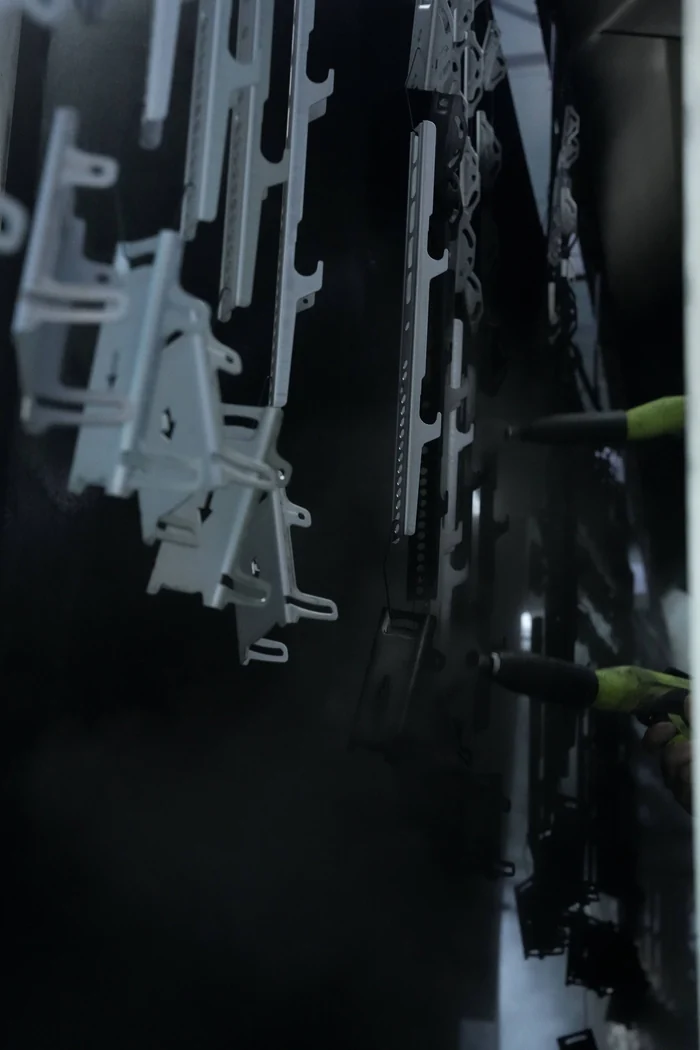
ThunderTech’s capability set for these families covers laser cutting, stamping, welding, powder coating, assembly, and packing, and our team can plan a proposed route drawing on operations in China and Thailand. What we do not do is promise a site before the review is complete. The quotation is the document that states the exact site, the actual route for that SKU, which steps are externally processed, the capacity and timing basis being offered, and the compliance and documentation requirements we would need the buyer to confirm. Send the drawing, revision, finish reference, tooling status, inspection expectations, packing scheme, and forecast, and our team can review them together and confirm the program details for that part.
Questions OEM Teams Ask About Thailand Production Planning
Why does ThunderTech review the Thailand route per SKU instead of once for the whole program?
Each TV mount or monitor arm SKU in an OEM program comes with its own drawing, revision status, material and finish requirements, inspection and packing definition, and quantity or forecast, so the arrangement our team can propose for one SKU is not automatically the arrangement we would propose for the next one in the same program. ThunderTech reviews each SKU against its own inputs, and the exact site, route, external steps, capacity and timing are confirmed in the quotation after that drawing, revision and requirements review.
What documents and inputs should a buyer send for a Thailand route review?
Send the drawing or SKU list with the revision you intend to release, the material and finish requirements, the quantity or forecast per SKU, the inspection and documentation requirements you expect us to work to, and the packing, labeling and delivery conditions the program has to satisfy, because those are the inputs that decide what our team can actually plan rather than describe in general terms. Once ThunderTech has those requirements, our team can review the drawing and revision and the exact site, route, external steps, capacity and timing are confirmed in the quotation.
When are the site, route, external steps, capacity and timing for our program confirmed?
They are not settled while the drawing, revision or requirements are still open, since every one of those inputs can change what our team is able to propose for a given SKU and revision. After ThunderTech reviews the drawing, revision and requirements you send, the exact site, route, external steps, capacity and timing are confirmed in the quotation for that specific SKU and revision.