
Buyers who arrive at this topic usually describe what they need in volume terms first: a large annual quantity of metal hardware, released in repeating batches, landing in a distribution network that cannot absorb variation between shipments. That framing is understandable, but it hides the part of the decision that actually governs whether a program runs cleanly. A TV wall mount and a monitor arm are not generic metal hardware. They are assembled mechanical products with a display-side interface, a wall or desk-side interface, a movement or fixing mechanism, a finish that the end user sees and touches, and a carton that has to survive retail or e-commerce handling. Volume multiplies whatever you decided about those things. It does not decide them for you.
So the useful sequence is the reverse of the one most inquiries follow. Define the product form and its controlled features, then decide what repeat production has to hold constant, then decide what a finished unit has to look like when it leaves the plant and who is accountable for it. Only after those three are stable does an annual quantity become a meaningful input to a manufacturing plan rather than a number that invites quotations you cannot compare.
Product form comes before volume
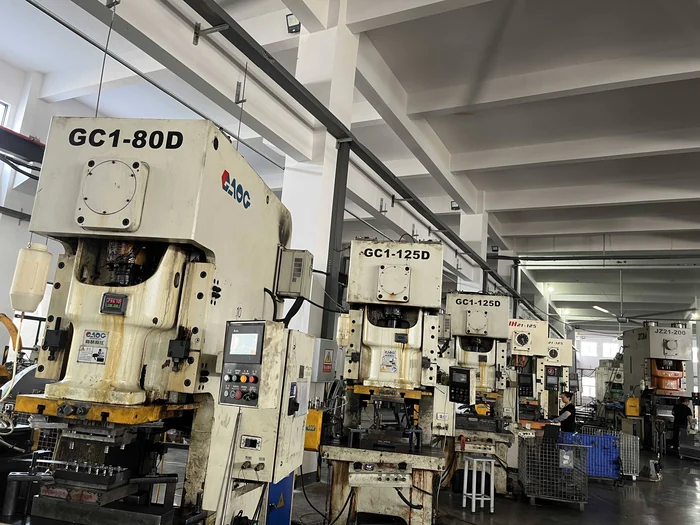
Within the display-mounting territory, product forms may call for different points of review in a repeat-production program. The controlled drawing, assembly specification and quality plan should identify the interfaces, features and finished-unit requirements that apply to the program.
For any product form, the drawing and specifications should state the interface conditions and controlled characteristics that require review. A program may also include components whose specification, supply arrangement and verification requirements need confirmation for that order.
Finish interacts with all of this. Powder coating is not a neutral layer added at the end. It adds thickness that can change a fit, it can bridge or fill a small feature, and it is masked or protected wherever a bare surface is needed for contact, electrical continuity, or a press fit. Where the same coated part also serves as a sliding or pivoting surface, the coating and the mechanism have to be considered together. Deciding these questions on a first article and writing them into the drawing is the difference between a program that scales and one that produces a stream of judgement calls at high quantity. If the interface, the critical characteristics, and the masking are still undefined, the volume number simply determines how many units inherit the ambiguity.
This is where a drawing review is worth more than a quotation. ThunderTech’s engineering and production teams can read a mount or arm drawing set and discuss, feature by feature, which dimensions look like true interface controls, which tolerances appear tighter than the product function needs, where a bend or weld sequence may be constrained by tooling access, where a coated surface is doing mechanical work, and which purchased components carry their own specification burden. Send the drawing or the current SKU and revision and our team can go through it with you and identify what still has to be fixed before quantity is discussed.
What repeat production actually has to hold constant
The reason high-volume programs fail is rarely that a factory cannot make the part. It is that the second, tenth, and later batches are not the same as the sample the buyer approved. Repeat production is a controls question, and the controls have to be attached to identifiable things: a revision, a tool, a fixture, a process setting, an inspection point, a record.
Revision control is the foundation. A mount or arm program typically changes at least once after launch, whether because a display interface is extended, a bracket is stiffened, a finish is adjusted, or a purchased component is re-specified. If the drawing revision, the bill of materials, and the tooling and gauges are not tied to one another, a change made for good reasons in one place propagates unevenly. Every downstream control is only as reliable as the answer to a simple question: which revision is this batch built to, and what physical tooling and inspection aids correspond to that revision.
Tooling and fixtures are among the items that may require review against the controlled drawing and quality plan. What is checked, recorded or escalated for a specific program belongs in the agreed documentation and quotation.
The third anchor is the definition of what gets checked and when. A high-volume mount or arm program usually needs agreement on incoming material and purchased components, in-process checks at the operations that create critical features, a first-article or first-off check whenever a setup or tool changes, coating verification, and a functional check on the finished assembly that reflects how the product is actually used, such as running an articulating joint through its intended movement or confirming that a gas-spring arm holds and adjusts as specified. Which of these apply, at what stage, and against what acceptance criteria has to come from the product’s own critical characteristics and from the customer’s requirements, not from a template. ThunderTech can review a proposed quality plan alongside the drawing, discuss which checks map to which features, identify where a gauge or fixture would make a check repeatable rather than subjective, and confirm in the quotation what inspection scope, records, and retention the program includes.
External processes deserve explicit treatment because they often sit outside the main flow. Plating, specialised surface treatment, heat treatment where applicable, printed or labelled components, and purchased mechanical components such as gas springs, fasteners, and bearings all arrive with their own specification and their own verification question. Any of these that a program requires should be named, along with how the process or component is specified, what evidence comes back with each lot, and how that evidence is linked to the batch record. Where an operation would be performed outside our own site, that is a matter to confirm in the quotation rather than something to assume in either direction.
Finished-unit handoff
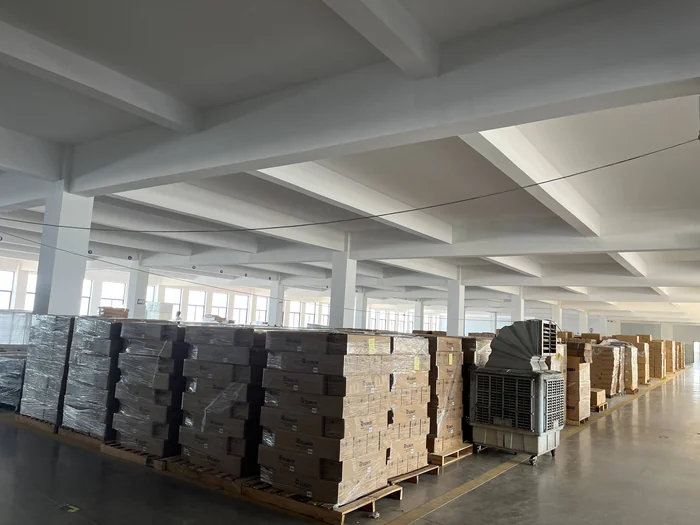
For a mount or arm program, the deliverable is not a metal part. It is a saleable unit: assembly complete or partly complete as agreed, hardware pack included, instruction sheet and any required markings present, retail or brown-box carton closed, labelled, and palletised in a way that survives the intended distribution path. Handoff is where a program either becomes easy for the customer to receive or becomes a recurring dispute, and it is worth defining as carefully as the product itself.
Start with assembly scope, because it determines much of what follows. Some buyers want a fully assembled and folded arm in the carton; others want subassemblies with a defined user assembly step; others want kitted components. Each choice changes the packing volume, the protection strategy, the content of the hardware pack, and what a functional check at the end of the line can actually verify. The hardware pack itself is a frequent source of trouble, because it is a small-parts kitting operation with many similar items, and the way it is counted, bagged, and verified needs a defined method rather than an assumption.
Packing then has to answer to the finish. A coated mount or a visible monitor stand can arrive dimensionally perfect and still be rejected for a scuff, so the interior protection, the way parts are separated from one another, and the way the heaviest component is restrained inside the carton are product decisions rather than shipping-department decisions. Carton and pallet configuration, labelling and barcode requirements, any customer-specific artwork or insert, and the documentation set that travels with the shipment all need to be stated. If the program feeds a marketplace or a retail channel with its own packaging and labelling rules, those rules should be on the table during the review, because they constrain carton design and often the pack quantity.
Finally, handoff includes records. What accompanies a shipment, how a batch is traceable back to material, tooling, and inspection results, and how a question about a specific carton is answered months later are all part of the same system. ThunderTech can discuss assembly scope, hardware pack method, protection concept, carton and pallet arrangement, labelling, and the record set with you against your actual channel requirements, and confirm the agreed packing specification and documentation in the quotation.
Where ThunderTech fits
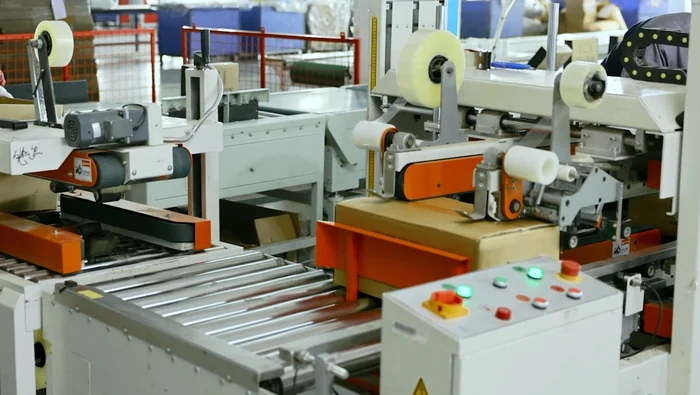
ThunderTech Pros, Ningbo Thundertech Co., Ltd., is a manufacturer of video-display installation products and an OEM and ODM partner for them. TV wall mounts in fixed, tilt, full-motion, and ceiling forms, mechanical and gas-spring monitor arms, monitor stands and risers, TV stands, and directly related AV accessories are the product territory our engineering, production, and quality teams work in every day, which is why the discussion above is framed around interfaces, joints, finishes, and cartons rather than around generic metal parts. Our manufacturing capability spans metal forming and cutting, welding, powder coating, assembly, and packing, supported by ERP-based production management and internal material movement, with operations in China and Thailand. Those are background facts about the company, not commitments attached to any particular part or order.
What that background does is make a real review possible. Bring a drawing set or an existing SKU and revision, the material and finish you intend, the purchased components you have specified, your quality-plan and record expectations, your assembly and packing scope, and your quantity or forecast pattern, and our team can walk through the route with you: which operations the product needs, in what sequence, what tooling or fixturing would be required, which characteristics need to be controlled and how, what external processes or purchased components have to be specified and verified, and how the finished unit would be assembled, checked, packed, and documented. Where something in the drawing works against manufacturability or against the finish you want, we would rather raise it during that review than discover it in a later batch.
The quotation is where any of this becomes definite. The producing site, the process route and operation sequence, any external processes, the inspection and record scope, the capacity we can commit to your release pattern, the packing specification, and the timing are all confirmed there against your final requirements, rather than assumed from a general capability description. Send the requirements and our team can confirm the program details for your product.
Frequently asked questions
Why does ThunderTech ask about product form before annual quantity?
Because quantity only becomes a useful planning input once the product is defined. The same annual figure implies a very different route for a fixed wall plate than for a full-motion arm with multiple pivots or a gas-spring arm whose behavior depends on a purchased component. Product form determines which operations are needed, where the critical features sit, whether tooling or fixturing is the constraint, and how much assembly and packing work each unit carries. Our team would rather review the drawing and the critical characteristics first, then discuss how your quantity and release pattern map onto a route we can actually confirm in a quotation.
What should be agreed before a repeating mount or arm program starts?
At minimum, the drawing revision the program is built to, the critical characteristics and how each is checked, the tooling and fixtures tied to that revision, the specification and verification method for purchased components and any external processes, the record set and retention, and the finished-unit definition covering assembly scope, hardware pack, carton, labelling, and documentation. These should be agreed as a program-specific quality and packing plan rather than adopted from a general standard, because the right answer depends on your product and your channel. Send the drawing and your requirements and we can review them point by point and confirm the agreed scope in the quotation.
Can capacity, site, and timing be committed before the review?
No, and treating them as committed early is one of the ways programs get into trouble. Site, route, external processes, inspection and record scope, capacity against your release pattern, packing, and timing all depend on the final product definition and the agreed quality plan. Our team can discuss the likely route and what would need to be true for it to work, but those points are confirmed in the quotation once your drawing, revision, components, quality requirements, packing scope, and forecast are settled.