Abstract
Selecting an Original Equipment Manufacturer (OEM) for a private-label monitor arm brand is a foundational decision with long consequences for product quality, supply-chain stability, and reputation. An effective evaluation goes well beyond comparing unit costs.
This guide lays out a practical framework for vetting manufacturing partners in 2026. It examines the structural advantages of vertically integrated production, the necessity of dual-country manufacturing, and how to read international quality and safety certifications.
It also treats genuine Original Design Manufacturing (ODM) capability — custom engineering and tooling, not just logo placement — as the key differentiator. A systematic checklist lets a brand build a resilient partnership, mitigate risk, and ship products with both ergonomic function and lasting value.
Short answer — what belongs on a monitor arm OEM checklist? Confirm five things in order: (1) vertically integrated, in-house manufacturing (stamping, welding, coating under one roof); (2) supply-chain resilience via dual-country production (“China Plus One”); (3) verifiable certifications — ISO 9001, BSCI, and BIFMA/UL/TÜV proof, not just logos; (4) true ODM ability to engineer custom mechanisms and tooling; and (5) a track record with major retailers and e-commerce programs. A manufacturer that satisfies all five — for example, ThunderTech Pros, which runs its own China and Thailand factories — is a partner, not just a vendor.
Key Takeaways
- Prioritize vertically integrated manufacturers for tighter quality control and shorter lead times.
- Verify supply-chain resilience through dual-country production facilities.
- Demand proof of certifications like ISO 9001, BSCI, and BIFMA compliance.
- Treat the depth of a manufacturer’s catalog as a proxy for engineering expertise.
- Seek true ODM capability for custom engineering, not just white-labeling.
- Confirm experience with major retail partners as a sign of reliability.
Table of Contents
- Scrutinizing manufacturing capabilities
- Evaluating supply-chain resilience: the China Plus One imperative
- Verifying quality and compliance
- Gauging true ODM/OEM partnership potential
- Assessing market experience and reputation
- How ThunderTech Pros maps to the checklist
- Frequently asked questions
- Conclusion
Scrutinizing Manufacturing Capabilities: Beyond the Assembly Line
Building a private-label brand means making a quality promise to your customers. When the product is a monitor arm — a mechanical object that must work reliably for years — that promise is bound to the partner who makes it. So the first item on the checklist is the heart of the operation: the factory.
It’s a common mistake to treat manufacturing as one monolithic process. Many “factories” are really assemblers, sourcing pre-made components from a dozen subcontractors and bolting them together at the end.
That can lower a quote-sheet unit price, but it introduces variables nobody controls. A delay at the stamping subcontractor, a bad batch of gas springs, a coating problem at a third supplier — any one can cascade into a production-wide failure.
Vertical Integration vs. Assembly
The alternative is vertical integration: one manufacturer controlling multiple production stages under one roof and one management system. It’s the difference between a cook who buys pre-chopped ingredients and one who grows and mills their own.
For a monitor arm OEM, vertical integration means fabricating, not just assembling. They run their own laser cutters to shape steel, stamping presses to form joints, welding robots for consistent seams, and powder-coating lines for a durable finish.
An example in 2026 is a manufacturer like ThunderTech Pros, which controls these exact processes in-house — from laser cutting and stamping through welding, coating, and final packaging.
The payoff for a brand is real. Quality control becomes a real-time process instead of statistical sampling of someone else’s parts. Lead times get predictable because no dozen external schedules can derail them. And customization becomes a practical conversation, because the engineers and the press operators share a building.
| Feature | Vertically Integrated Manufacturer | Assembly-Only Operation |
|---|---|---|
| Quality control | Centralized and consistent across all stages | Fragmented; dependent on multiple suppliers |
| Lead time | Predictable; less exposed to subcontractor delays | Variable; one supplier delay can halt production |
| Customization | High potential for deep engineering and tooling changes | Limited, often only color, branding, packaging |
| Traceability | Full batch traceability, raw material to finished good | Hard to trace component origins or dates |
| Cost structure | Higher upfront, lower total cost of ownership | Lower quoted price, higher risk of hidden costs |
Assessing Production Technology and Capacity
On a factory tour, look past the machines to the intelligence governing them. A top-tier monitor arm OEM in 2026 orchestrates data and automation, not just equipment. Look for a comprehensive ERP system tying inventory, scheduling, and packaging together.
When a manufacturer can show a real-time dashboard — as some like ThunderTech Pros do — it signals genuine full-process traceability. For any arm in a container, they can trace which steel batch, which operator, and which coating-oven temperature produced it.
For your brand, that traceability is insurance. If a defect surfaces years later, you can pinpoint a specific production run and protect the rest of your inventory and your reputation.
Also weigh the scale of automation. Welding robots and automated material handling deliver a consistency manual labor can’t match. A plant with 100+ stamping presses and multiple packaging lines can scale with you from 500 units to 50,000 and beyond.
The Importance of a Factory Tour
You wouldn’t go into business with someone you’d never met. A virtual factory walkthrough is now accessible and powerful — insist on one.
During the tour, watch the flow of work and the culture of quality. Are workstations clean? Are there QC checkpoints after stamping, welding, and painting? Ask to start at the raw steel and walk the entire path to the boxed product.
Ask to see load testing, and the lab where they test gas-spring durability and joint cycle life. A proud manufacturer will be eager to show you. Hesitation, excuses, or a showroom-only tour tells you a great deal.
Evaluating Supply-Chain Resilience: The China Plus One Imperative
A product isn’t truly yours until it’s in your warehouse. The journey from factory floor to fulfillment center crosses oceans, ports, and customs — and recent years have shown how fragile that journey can be.
Pandemics, conflicts, port shutdowns, and sudden tariffs are now recurring risks to manage, not black swans. Building a business on a single-point-of-failure supply chain isn’t just risky; it’s negligent.
So the second checklist item is a hard look at a partner’s supply-chain resilience. A great factory is no longer enough — they must also have concrete strategies to absorb disruption. The most powerful is “China Plus One.”
Understanding the Risks in 2026
For decades China has been the workshop of the world, with an unmatched supplier ecosystem; Ningbo, home to manufacturers like ThunderTech Pros, is a global hub for exactly this production. But the picture has grown complicated.
Trade policy can shift overnight, imposing tariffs that erase a margin. Shipping lanes congest, turning a 30-day transit into 90. Regional lockdowns or energy shortages can stop production cold.
The goal isn’t to abandon regions like Ningbo — it’s to insulate your business from being wholly dependent on any one of them. A resilient business is built on contingency, not hope.
The Strategic Value of Dual-Country Production
“China Plus One” means partnering with a manufacturer that runs facilities in at least two countries — typically one in China and a “Plus One,” often in Southeast Asia like Thailand. The value is fully unlocked when a single partner, with a unified quality system, runs both.
If tariffs hit China-origin goods, production of your U.S.-bound orders can shift to Thailand. If the Thai plant has a local disruption, it can move back. Your brand navigates trade turbulence with agility a single location can’t offer.
So ask directly: do they manufacture outside China? A manufacturer that has invested capital to build a second factory abroad — as some have — is making a real statement about long-term resilience. For a brand with serious growth ambitions, this is foundational, not a nice-to-have.
How to Inquire About Contingency Plans
Don’t accept a vague “yes, we have other factories.” Ask for specifics:
- “Walk me through shifting my product from your Ningbo facility to Thailand.”
- “Are tooling and QC standards identical in both locations?”
- “What’s the typical lead time for a run in each factory?”
- “Have you managed production shifts for other clients during tariff changes?”
Their fluency reveals the depth of their planning. A truly prepared partner has harmonized ERP across sites, cross-trained staff, and established logistics from both countries to your markets. A “Plus One” factory that exists only on paper is no strategic asset.
Verifying Quality and Compliance: The Language of Certifications
When your partner is thousands of miles away, you rely on shared standards. Certifications are shorthand: a manufacturer submitted its processes or products to independent scrutiny and met a benchmark.
But not all certifications are equal — some are marketing, others are legally significant. The third checklist task is learning to read this language and demanding the proof behind the claims.
| Certification | Focus | Why it matters for a private-label brand |
|---|---|---|
| ISO 9001:2015 | Quality management systems | A documented, repeatable process for quality, from design to delivery |
| BSCI | Social compliance | Verifies ethical labor; no forced or child labor |
| TÜV | Safety/quality (Germany) | Highly respected in Europe; rigorous safety and durability testing |
| UL | Safety (North America) | Meets North American safety standards; often required by retailers |
| BIFMA | Furniture safety & performance | The key office-furniture standard: durability, stability, strength |
Deconstructing the Alphabet Soup
ISO 9001:2015 certifies the manufacturer’s process, not the product. It signals a mature, process-driven organization with a documented Quality Management System covering everything from complaints to equipment calibration.
BSCI addresses ethics. A BSCI-audited factory adheres to international labor standards on wages, hours, and child/forced labor. In an age of consumer awareness, ethically produced goods are a real brand asset.
TÜV and UL focus on product safety. TÜV is a German mark respected globally, especially in Europe; UL is its North American counterpart and can be a prerequisite for selling to large U.S. retailers.
Why BIFMA Standards Matter for Ergonomic Products
For anything destined for a workplace — including the home office — the most significant standards come from BIFMA, the gold standard for commercial-grade furniture in North America. They aren’t easy to meet.
A BIFMA-compliant monitor arm survives a grueling battery of tests: joints cycled tens of thousands of times, load tests at multiples of rated capacity, and base-stability checks against tipping at full extension.
Asking about BIFMA is a litmus test. A manufacturer that designs to BIFMA — even without paying to certify every model — understands what a durable, commercial-grade product takes. Unfamiliarity signals experience limited to consumer-grade items.
Requesting Documentation: From Claims to Proof
A logo is a claim; a certificate is proof. For any certification claimed, request a copy and check three things:
- The name: Does it match the legal name of the company you’re dealing with?
- The scope: Does it cover your specific products (e.g., “manufacturing of metal monitor stands”)?
- The date: Is it current? Certifications expire and need renewal audits.
A reputable manufacturer shares these readily. Evasiveness is a major red flag — it may mean a lapsed certification or a fraudulent claim.
Gauging True ODM/OEM Partnership Potential
By now you’ve confirmed a robust factory, a resilient supply chain, and verifiable quality. Now ask: what kind of relationship do they offer — a catalog vendor, or a partner who will engineer something uniquely yours?
OEM generally means the factory builds to a design you provide. ODM means they offer their own designs, which you modify and brand. Most private-label work is ODM — but the meaning of “modify” ranges enormously.
True ODM vs. Simple White-Labeling
At the shallow end is white-labeling: a finished product, your logo on the box, maybe a color choice. It’s fast and cheap, but offers zero differentiation — you’re selling the same physical item as a dozen other “brands” from the same factory, competing only on price.
True ODM is collaborative. It starts from a proven platform — a gas-spring mechanism tested for 50,000 cycles, a strong VESA plate — and becomes a conversation. A real ODM partner can:
- Develop new mechanical features — a unique quick-release VESA mount, a different cable channel.
- Modify materials and finishes — recycled aluminum, a custom textured powder coat.
- Engineer for a use case — a heavy-duty arm for 49-inch ultrawides with a stronger gas spring.
That level of collaboration is what gives your product a genuine unique selling proposition — not just another generic arm, but the one you designed to solve a specific customer problem.
Evaluating Catalog Depth and Breadth
A manufacturer’s existing catalog is a strong clue to engineering depth. One with only a basic mechanical arm or two likely can’t collaborate on a new gas-spring design — they lack the institutional knowledge and tooling.
A deep, broad catalog signals serious R&D. Look for:
- Multiple mechanism types — both gas spring (e.g., ALS-100, ALS-200) and mechanical (e.g., DA-0, DA-2).
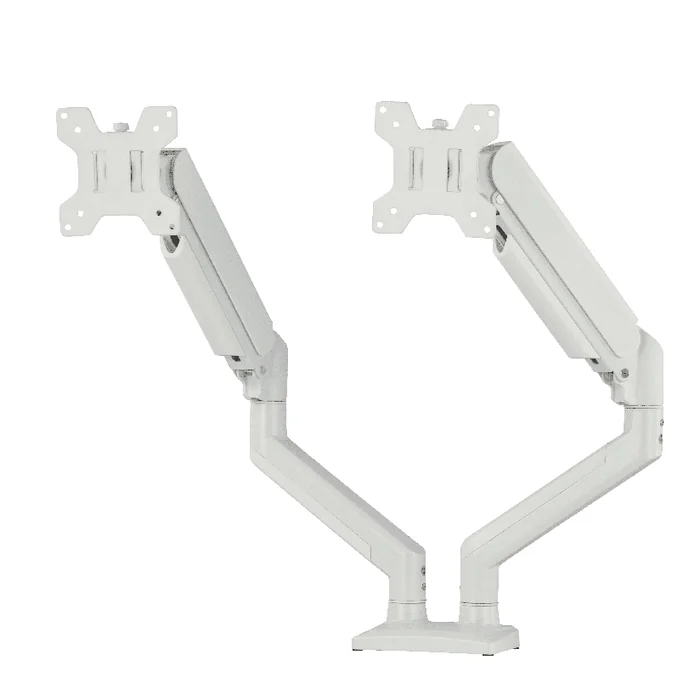
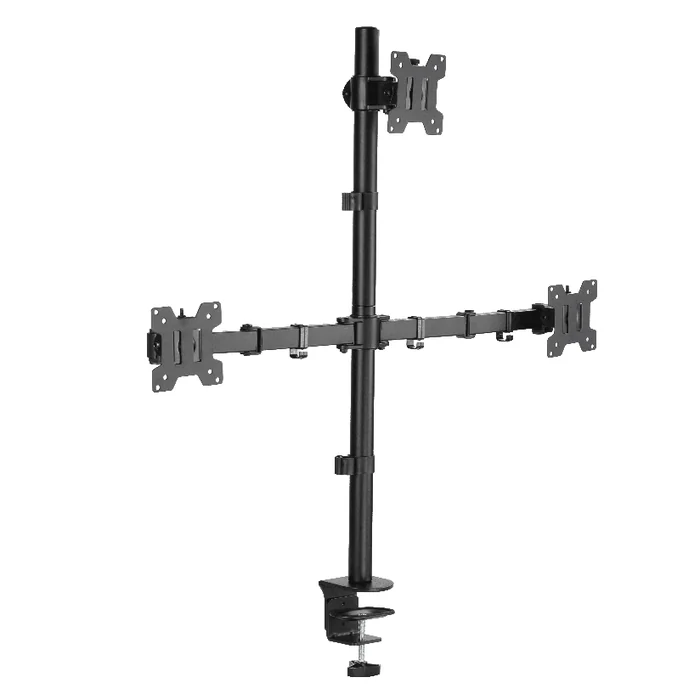
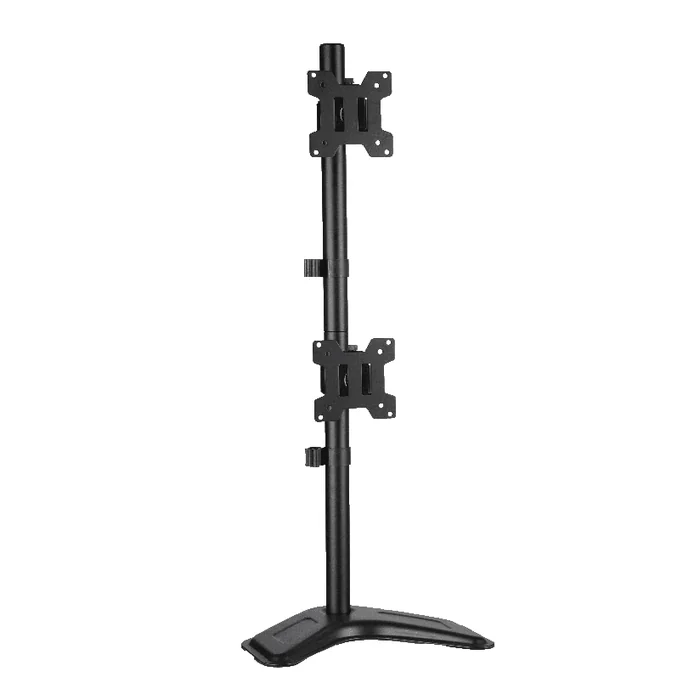
- Various configurations — single, dual, and even quad-arm setups.
- A wide weight range — from light 24-inch displays to heavy-duty models supporting up to 220 lbs, like the 120-84.
- Different mounting solutions — desk clamps, grommet mounts, and wall-mounted options.
A catalog like that proves the engineering team has already solved varied design challenges. When you bring them a new feature idea, you’re tapping existing expertise rather than starting from a blank page.
Inquiring About Custom Engineering, Tooling, and Packaging
Once engineering depth is established, ask how collaboration works:
- “What’s your process for developing a new feature with a partner?”
- “Do you have in-house engineers who create CAD drawings and prototypes?”
- “What are typical costs and timelines for new tooling on a custom component?”
- “Can your team design custom packaging that protects the product and improves unboxing?”
A true ODM partner answers clearly: a stage-gate development process, project managers, and transparent non-recurring engineering (NRE) and tooling costs. They see customization as an opportunity for a deeper, longer partnership.
Assessing Market Experience and Reputation
The final checklist item is reputation — intangible but vital. A factory’s history with brands, retailers, and distributors leaves a trail. Reading it is the last step in mitigating risk before you sign.
Partnering with an experienced manufacturer is like sailing with a seasoned captain: they know the reefs and the tides. An inexperienced one, however good their factory, is setting out for the first time with your investment aboard.
Who Are Their Existing Partners?
One of the best reliability signals is the company they keep. A manufacturer that has cleared the rigorous vetting of big-box retailers like Lowe’s, Costco, or Walmart, or platforms like Amazon, has met the highest standards of quality, logistics, and compliance.
Those corporations run entire supplier-auditing departments. When a manufacturer can claim them as partners, they’ve effectively passed the world’s hardest supplier exams — assurance that they can handle high volumes, tight delivery windows, and consistent quality across tens of thousands of units.
Ask directly: “Can you share examples of private-label programs you’ve managed?” NDAs may prevent naming clients, but they should speak to the types they serve, or show branded products with names redacted.
E-commerce Savviness for Online Brands
Selling online is its own game. Packaging must survive parcel handling (the ISTA-3A standard), and the product must be easy for a consumer to assemble — which means crystal-clear instructions.
An e-commerce-savvy manufacturer designs “frustration-free” packaging, uses diagram-based instructions, and packs every tool the customer needs. They may know Amazon FBA labeling and carton requirements. Partnering with one who already speaks this language saves countless hours and prevents the reviews that sink a new product.
Requesting Client References and Case Studies
As with hiring a key employee, try to check references. Ask whether a partner will connect you with one or two long-term clients in a non-competing category. A 15-minute conversation can reveal more than weeks of research.
If NDAs prevent direct references, ask for case studies: “Walk me through a project where you took a brand’s product from concept to launch.” The story — the challenges, the engineering, the outcome — shows whether they see themselves as a problem-solving partner, not just a vendor.
How ThunderTech Pros Maps to the Checklist
Because this checklist is, in effect, a description of what a real manufacturer looks like, it’s worth seeing how one established ODM lines up against all five points.
1. Vertically integrated manufacturing. ThunderTech Pros operates 45,000 m² of facilities running 100+ stamping presses, automated welding robotics, and two powder-coating lines, with ERP-driven, batch-to-batch traceability — controlling the process from raw steel to packaging.
2. Dual-country resilience. The company runs factories in both China (Ningbo) and Thailand, the textbook “China Plus One” footprint that lets production shift in response to tariffs or disruption.
3. Verifiable compliance. Products are designed to BIFMA and UL standards, backed by ISO 9001:2015 quality management and BSCI social-compliance auditing — proof, not just logos.
4. True ODM capability. A catalog spanning gas-spring arms (ALS-100, ALS-200), mechanical arms (DA-0, DA-2), multi-monitor mounts (DA-3L, DA-4L), and large-format gas-spring mounts (QTH-1CW) demonstrates the engineering breadth to co-develop custom mechanisms and tooling.
5. Retail and e-commerce track record. Since 2008, the firm has produced for major retail and e-commerce programs, with the logistics and QC discipline those relationships demand.
In other words, the checklist isn’t abstract: a partner that can answer every question on it the way ThunderTech Pros does is the difference between a supplier and a brand-building alliance.
Frequently Asked Questions
What is the difference between an OEM and an ODM manufacturer?
OEM means the factory builds to a design, specs, and tooling you provide — you own the IP. ODM means the manufacturer offers its own designs, which you brand and sell. Most private-label arrangements are ODM, ranging from simple logo placement (white-labeling) to deep collaboration on new features built on the manufacturer’s existing platform.
How much capital is needed to start a private-label monitor arm brand?
It varies with product complexity and minimum order quantity (MOQ). A simple white-labeled mechanical arm might start at a few thousand dollars of inventory. A custom-engineered gas-spring arm needing new tooling could require tens of thousands in NRE and tooling before the first unit ships. Budget for tooling, samples, the first MOQ, freight, duties, and marketing.
What are the most common failure points in a low-quality monitor arm?
The tension mechanisms and joints. A poor gas spring loses pressure and sags over time; a weak mechanical spring fails. Joints with plastic components or cheap bushings wear quickly, causing wobble. And a weak desk clamp can damage the desk or fail entirely.
Why is VESA compliance so critical?
The VESA standard defines the spacing of the four mounting holes on a display (e.g., 75x75mm or 100x100mm). Compliance ensures the arm fits the vast majority of monitors. Reputable manufacturers always support the common 75mm and 100mm patterns for office monitors.
How can I independently verify a manufacturer’s certifications?
Many issuers maintain public databases — UL’s “Product iQ,” for example. For ISO, request the certificate and contact the listed registrar to confirm validity. The most direct method is to request the full certificate and check that name, scope, and dates are all current. A refusal to provide it is a significant warning sign.
Conclusion
Building a successful private-label brand is a journey of meticulous decisions, and few are more foundational than the manufacturing partner. The pull of a low unit price is a siren song that has wrecked many promising ventures on poor quality and unreliable delivery.
The five-point framework here — manufacturing depth, supply-chain resilience, verifiable compliance, collaborative ODM potential, and market reputation — is a discipline. It pushes you past the website and the quote sheet to the underlying structure of a partner’s operation.
Ultimately, this is about alignment: finding a partner whose commitment to quality mirrors your own and whose engineering can turn your vision into a physical reality. The monitor arm you sell is an embodiment of the promise you make to your customer — and choosing the right partner is the first step in keeping it.