Abstract
The strategic development of Original Equipment Manufacturer (OEM) monitor arm packaging for retail channels represents a complex intersection of structural engineering, brand marketing, and supply chain logistics. An effective packaging solution must perform the primary function of protecting a mechanically intricate and heavy product through the rigors of global distribution, mitigating risks of shock, vibration, and compression.
Simultaneously, it serves as the first tangible interaction between the brand and the consumer, making the unboxing experience a critical moment for establishing brand identity and customer satisfaction. This analysis examines the multifaceted requirements for successful OEM monitor arm packaging for retail, exploring the balance between protective material science, visual branding through advanced printing techniques, the cognitive ergonomics of assembly instructions, and the growing imperative for environmental sustainability.
By partnering with a vertically integrated Original Design Manufacturer (ODM), brands can leverage existing engineering expertise and production efficiencies to create packaging that is protective, communicative, and cost-effective, ultimately enhancing product value and reducing post-purchase issues like returns due to shipping damage or user frustration.
Key Takeaways
- Prioritize structural integrity using drop-testing and robust inner materials to prevent shipping damage.
- Use custom graphics and a planned unboxing sequence to create a memorable brand experience.
- Design clear, visual, frustration-free instructions to improve customer satisfaction and reduce support calls.
- Choose sustainable materials like FSC-certified paper to meet modern consumer expectations.
- Partner with a vertically integrated ODM for cost-effective, high-quality oem monitor arm packaging for retail.
- Ensure all small components are kitted in numbered bags that correspond to assembly steps.
- Optimize box dimensions to reduce material waste and lower dimensional weight shipping costs.
Table of Contents
- Understanding the Dual Role of Retail Packaging
- 1. Prioritizing Structural Integrity: Protecting the Product from Factory to Shelf
- 2. Cultivating Brand Identity: The Power of Custom Graphics and the Unboxing Experience
- 3. Designing for Clarity: The Art of Frustration-Free Assembly Instructions
- 4. Embracing Sustainability: Meeting Consumer Demand for Eco-Friendly Solutions
- 5. Achieving Cost-Effectiveness: Partnering with a Vertically Integrated ODM Manufacturer
- Frequently Asked Questions (FAQ)
- Conclusion
Understanding the Dual Role of Retail Packaging
When a customer considers purchasing a monitor arm, they are thinking about ergonomics, desk space, and screen positioning. They are rarely, if ever, thinking about the box it comes in.
Yet, for the brand selling that product, the packaging is a silent ambassador, a structural guardian, and a critical component of the overall value proposition. The journey of a monitor arm from a factory in Ningbo to a customer’s home office in Ohio is fraught with peril.
It is lifted, dropped, stacked, and vibrated. The packaging is its only defense.
Once it arrives, that same box transforms from a protective shell into the first chapter of the customer’s experience with your brand. Does it communicate quality?
Is it easy to open? Does it present the product in a way that inspires confidence?
The development of effective OEM monitor arm packaging for retail environments requires a delicate balancing act. It is a technical discipline rooted in physics and material science, yet it is also a creative one, deeply connected to marketing and human psychology.
A failure in the first discipline results in damaged products, costly returns, and negative reviews. A failure in the second results in a missed opportunity to build brand loyalty and differentiate your product in a crowded market.
For e-commerce brands and private-label retailers, who may never physically interact with their customers, the packaging is one of the few tangible touchpoints they have. It must speak for them.
Therefore, approaching packaging design not as an afterthought or a mere cost center, but as an integral part of the product itself, is fundamental to success.
1. Prioritizing Structural Integrity: Protecting the Product from Factory to Shelf
The foremost responsibility of any packaging is to deliver its contents to the end-user in the exact condition they left the factory. For a product like a monitor arm—which combines heavy steel or aluminum components, articulated joints, and potentially sensitive gas spring or mechanical tensioning systems—this is a non-trivial challenge.
The supply chain is an unforgiving environment. A package may be dropped from a conveyor belt, compressed under a stack of heavier items in a shipping container, or subjected to constant, high-frequency vibrations on the back of a truck.
Effective OEM monitor arm packaging for retail must be engineered to withstand these forces.
The Physics of Transit: Understanding Shock, Vibration, and Compression
To design a protective package, one must first understand the threats it will face. The three primary forces are shock, vibration, and compression.
Shock is the result of sudden impacts, such as drops. The goal of protective cushioning is not to make the package “soft” but to decelerate the product over a longer period, reducing the peak force (G-force) experienced by the components.
Imagine catching a baseball with a stiff hand versus letting your hand move back with the ball; the latter approach extends the deceleration time and reduces the sting. Cushioning materials in monitor arm packaging do the same for the product.
Vibration occurs continuously during transport via truck, ship, or plane. Every vehicle has a natural resonant frequency.
If the packaging system’s resonant frequency matches the vehicle’s, the vibrations can be amplified dramatically, potentially causing screws to loosen, components to abrade against each other, or plastic parts to fatigue and crack. Proper packaging design involves dampening these vibrations or shifting the package’s resonant frequency away from that of common transport methods.
Compression is the static force exerted on a box when it is stacked in a warehouse or container. The outer box must possess sufficient stacking strength to support the weight of the boxes above it for extended periods without crushing, which could damage the contents or create an unstable stack. The strength of a corrugated box is significantly affected by humidity, pallet overhang, and stacking patterns, all of which must be considered.
Material Selection for Inner Support: Molded Pulp, EPE Foam, and Corrugated Inserts
The choice of internal cushioning and bracing materials is perhaps the most critical decision in protective packaging design. The goal is to immobilize the monitor arm, preventing its parts from moving or colliding, while also providing the necessary shock absorption.
| Material | Primary Advantages | Primary Disadvantages | Best Use Case for Monitor Arms |
|---|---|---|---|
| Expanded Polyethylene (EPE) Foam | Excellent shock absorption, resilient (recovers shape after impact), non-abrasive, moisture resistant. | Petroleum-based (less sustainable), can be more expensive, bulky. | Protecting heavy, high-value gas spring arms where maximum shock protection is the priority. |
| Molded Pulp/Fiber | Highly sustainable (made from recycled paper/cardboard), can be custom-molded to complex shapes, good for bracing. | Less resilient than foam (crushes on impact), can create dust, susceptible to moisture. | Cradling the base, VESA plate, and arm segments of a standard mechanical arm in an eco-conscious package. |
| Corrugated Inserts | Cost-effective, recyclable, surprisingly strong when engineered correctly (e.g., folded, layered). | Labor-intensive to assemble if complex, less effective for high-G shocks compared to foam. | Creating compartments for hardware, separating arm segments, and adding to the box’s overall stacking strength. |
A superior packaging solution often uses a combination of these materials. For instance, a manufacturer like ThunderTech Pros, which produces a range of arms from the mechanical DA-2 to the gas spring ALS-100, might use robust custom-molded pulp trays to hold the main components of the DA-2, leveraging pulp’s excellent bracing capabilities. For the heavier and more sensitive ALS-100 gas spring arm, they might specify die-cut EPE foam end caps to provide superior shock absorption for the cylinder mechanism, demonstrating a nuanced approach to material selection based on the specific product’s needs.
The Role of the Outer Box: Corrugation Grades and Burst Strength
The outer corrugated box is the first line of defense. Its performance is determined by its construction.
Corrugated fiberboard is not just “cardboard”; it is an engineered material consisting of linerboard (the flat outer layers) and a fluted medium (the wavy inner layer). The strength of the box is typically specified in one of two ways: the Burst Test (Mullen Test) or the Edge Crush Test (ECT).
The Burst Test measures the force required to rupture the wall of the box, indicating its ability to withstand rough handling and contain its contents. An ECT rating, measured in pounds per linear inch of load-bearing edge, is a more direct predictor of a box’s stacking strength.
For a heavy product like a monitor arm, which can weigh anywhere from 5 to 25 pounds, a box with a high ECT rating (e.g., 32 ECT or higher) is essential. The choice of flute profile (the size of the “waves”) also matters.
C-flute is a common all-purpose choice, while B-flute offers better crush resistance and a smoother printing surface. Double-wall corrugated board, which combines two fluted mediums and three linerboards, provides a significant increase in both stacking strength and puncture resistance, making it a wise choice for heavy-duty monitor arms destined for the unpredictable e-commerce shipping environment.
Drop Testing and Simulation: Validating Packaging Performance with ISTA Standards
How can a brand be confident that its packaging design is effective before shipping thousands of units across the globe? The answer lies in standardized testing. The International Safe Transit Association (ISTA) provides a series of testing procedures that simulate the hazards of a typical supply chain.
For a product sold through e-commerce, a procedure like ISTA-3A or ISTA-6-AMAZON.com is appropriate. These tests involve a sequence of controlled drops onto the box’s faces, edges, and corners from specific heights, along with periods of random vibration on a shaker table and compression tests. For example, the test might require the packaged product to survive multiple drops from a height of 30 inches on its corners, simulating a fall from a conveyor, followed by an hour of vibration that mimics a long truck journey.
Passing these tests provides a high degree of confidence that the OEM monitor arm packaging for retail will protect the product. Reputable ODM partners like ThunderTech Pros have in-house testing labs or work with third-party labs to perform this validation as part of the packaging development process. Requesting and reviewing an ISTA test report for your specific product is a crucial step in due diligence, transforming packaging design from a guessing game into an engineering discipline.
2. Cultivating Brand Identity: The Power of Custom Graphics and the Unboxing Experience
If structural integrity is the science of packaging, brand communication is its art. In an e-commerce context, the arrival of the package is a moment of high anticipation.
The customer has seen product photos online, but the box is their first physical contact with your brand. A plain, generic brown box says very little.
It is a missed opportunity. A beautifully designed, custom-printed box, however, begins to tell a story.
It validates the customer’s purchase decision and elevates the perceived value of the product inside before it is even seen. This “unboxing experience” has become a powerful marketing tool, shared across social media and shaping the perception of countless potential customers.
Beyond the Brown Box: Full-Color Litho-Lamination vs. Flexographic Printing
Creating a visually appealing retail box involves choosing the right printing method. The two most common options for corrugated boxes are flexographic printing and lithographic lamination.
Flexographic (Flexo) Printing: This method works like a rubber stamp, using a flexible printing plate to apply ink directly to the corrugated board. It is cost-effective for large runs and offers fast production speeds, but it delivers lower resolution, limited color complexity, and less precise color registration. It is best suited to simple, bold graphics with one or two colors—ideal for printing logos, basic product information, and handling symbols directly onto a standard shipping box.
Lithographic (Litho) Lamination: This is a two-step process. First, the design is printed in high resolution onto a sheet of paper (the “litho label”).
Then, the printed sheet is laminated onto the corrugated board before it is cut and folded into a box. It delivers photographic quality, vibrant colors, precise registration, and special finishes like gloss or matte coatings, at the cost of higher upfront investment and longer lead times.
It is the right choice for a premium, retail-ready “show box” that sits on a store shelf or makes a strong impression on home delivery.
For a brand aiming to compete with established names, investing in litho-lamination for their OEM monitor arm packaging for retail can be a game-changer. It transforms the box from a container into a billboard, communicating the product’s quality and features at a glance.
The Unboxing Sequence as a Narrative: Designing a Memorable Customer Journey
A great unboxing experience is choreographed. It is not about randomly pulling parts out of a box; it is a deliberate, sequential reveal. Think of it as a story with a beginning, a middle, and an end.
- The Opening: Does the box have a frustration-free tear strip or a simple lid? Or does the customer need to find a knife to cut through layers of tape? The initial opening should be clean and satisfying.
- The Welcome: What is the first thing the customer sees? Instead of a jumble of parts, it could be a welcome card, a quick-start guide, or a printed inner flap with a brand message. This small touch sets a positive tone.
- The Reveal: The main components of the monitor arm should be presented neatly and logically. The heavy base might be at the bottom for stability, with the articulated arm segments nestled securely in their molded trays.
- The Details: The smaller parts—screws, Allen keys, cable management clips—should not be loose. They should be kitted in clearly labeled, numbered bags that correspond to the steps in the instruction manual.
An ODM partner with experience in retail packaging can help design these internal layouts. They understand how to use corrugated dividers and molded inserts not just for protection, but to create a structured and pleasing presentation.
Integrating Your Logo and Brand Story into Every Component
Branding does not stop at the outer box. A truly cohesive experience carries the brand identity through to the internal components.
- Instruction Manual: The manual should be professionally designed with your logo, brand colors, and typography. It is a key piece of brand literature.
- Internal Components: Can the logo be subtly laser-etched or printed on the monitor arm itself? ThunderTech Pros, for example, offers this as part of their ODM services.
- Hardware Bags: Printing your logo on the small bags containing the screws and tools is a small detail that reinforces a premium feel.
- Cable Management: Even the included cable management clips can be produced in a custom brand color.
Each of these details, while small on its own, contributes to a powerful cumulative effect. It communicates to the customer that every aspect of the product has been thoughtfully considered, building trust and a sense of quality that a generic product cannot match.
Material Finishes: Matte vs. Gloss Lamination and Spot UV Effects
For brands opting for litho-laminated packaging, the finish of the box provides another layer of sensory branding.
| Finish | Tactile Feel | Visual Effect | Brand Association |
|---|---|---|---|
| Matte Lamination | Soft, smooth, velvety. | Non-reflective, muted, sophisticated. | Understated luxury, modern, professional. |
| Gloss Lamination | Slick, smooth. | Highly reflective, makes colors “pop,” eye-catching. | Energetic, high-tech, attention-grabbing. |
| Spot UV | A glossy, raised coating applied to specific areas. | Creates a contrast between matte and gloss on the same surface. | Highlights a logo, product image, or key feature; adds a tactile dimension. |
Imagine a box for a high-end, minimalist monitor arm. A deep black, matte-laminated box with the brand’s logo in a subtle spot UV finish would feel incredibly premium and aligned with the product’s aesthetic.
Conversely, a gaming-focused monitor arm might use a gloss lamination with dynamic, colorful graphics to appeal to its target audience. The finish is not merely decorative; it is a tool for aligning the packaging with the brand’s core identity and the customer’s expectations.
3. Designing for Clarity: The Art of Frustration-Free Assembly Instructions
A monitor arm is not an intuitive product to assemble. It involves clamps, tension adjustments, and adherence to the VESA mounting standard.
A poorly written or confusing instruction manual can quickly turn a customer’s excitement into frustration, leading to negative reviews, product returns, or even improper installation that results in property damage. The instruction manual is a crucial, and often overlooked, component of the product experience.
Designing it with empathy and a deep understanding of human psychology is paramount.
The Psychology of Instruction Manuals: Reducing Cognitive Load
The goal of an instruction manual is to transfer knowledge efficiently. To do so, it must minimize cognitive load—the total amount of mental effort being used in the working memory.
When a user is trying to decipher tiny text, match ambiguous diagrams to real-world parts, and hold a heavy component in place, their cognitive load skyrockets. This leads to errors and frustration.
Effective instruction design focuses on several key principles to reduce this load: chunking, which breaks a complex process into small, single-goal steps; signaling, which uses arrows, circles, and color to draw attention to the most important information; redundancy, which presents the same information as both illustration and short caption; and coherence, which eliminates all extraneous information so every word and line serves a purpose. A well-designed manual guides the user’s attention, making the next logical action obvious.
Visual Storytelling: The Superiority of Illustrations over Text-Heavy Guides
For a physical assembly process, pictures are almost always better than words. The human brain processes visual information far more quickly than text. A good instruction manual tells a story visually, using a sequence of clear, simple illustrations.
Consider the task of attaching the VESA plate to the monitor. A text-heavy manual might say: “Take the four M4 x 12mm screws from Bag C and use them to attach the VESA mounting plate (Part 5) to the back of your monitor, ensuring the arrows on the plate are pointing upwards.”
A visually-driven manual would instead show a clear illustration of the back of a generic monitor, an illustration of the VESA plate with arrows indicating correct orientation, an illustration of the specific screw needed labeled “M4 x 12mm,” and a final illustration showing the plate being attached with arrows indicating where the screws go. This visual approach transcends language barriers, making it ideal for products sold in international markets, and it communicates spatial relationships far more effectively than text. A global ODM will have skilled technical illustrators on staff who can create these guides as part of the OEM monitor arm packaging for retail service.
Kitting and Part Organization: Numbered Bags and Logical Layouts
The most brilliant instruction manual is useless if the user cannot find the parts it refers to. A common source of frustration is the “bag of screws”—a single plastic bag containing a dozen different types of screws, washers, and spacers. The user is forced to dump them out and painstakingly match each one to a confusing life-size diagram in the manual.
The best practice is hardware kitting. All the hardware for the entire assembly is sorted, counted, and sealed into separate, clearly labeled compartments or bags.
Ideally, the labels correspond directly to the steps in the manual: Step 1 uses the screws from Bag 1, Step 2 uses the clamp pad from Bag 2, Step 3 uses the M5 Allen key from Bag 3. This simple organizational step dramatically reduces cognitive load and assembly time.
When evaluating an ODM partner, asking to see their hardware kitting process is a great way to gauge their attention to detail.
Digital Integration: QR Codes for Video Guides and Support
While a printed manual is essential, modern packaging can bridge the gap between the physical and digital worlds. Including a QR code on the box or the manual itself provides immense value. This QR code can link to an assembly video, a detailed FAQ page, or a customer support contact.
A short, professionally produced video showing the entire assembly process step-by-step can clarify any points of confusion from the printed manual, and is particularly helpful for demonstrating actions like adjusting gas spring tension. Integrating a QR code is an inexpensive way to add a layer of support and confidence for the customer, and it shows that the brand’s commitment to a good experience extends beyond the initial purchase. It is a hallmark of modern, customer-centric OEM monitor arm packaging for retail.
4. Embracing Sustainability: Meeting Consumer Demand for Eco-Friendly Solutions
In 2026, sustainability is no longer a niche concern; it is a core expectation for a growing segment of consumers. A brand’s approach to packaging is a highly visible indicator of its environmental commitment.
Excessive plastic, non-recyclable materials, and oversized boxes can create a negative first impression and even deter future purchases. Designing OEM monitor arm packaging for retail with sustainability in mind is both an ethical responsibility and a smart business decision.
It aligns the brand with modern consumer values and can even lead to cost savings.
Material Choices with Lower Environmental Impact: FSC-Certified Paper and Recycled Content
The journey toward sustainable packaging begins with material selection. For a product like a monitor arm, where protection is paramount, the goal is not to eliminate all packaging but to choose better materials.
The outer box and internal dividers are prime candidates for sustainable sourcing. The Forest Stewardship Council (FSC) provides a certification system that ensures paper and wood products come from responsibly managed forests.
Specifying FSC-certified corrugated board for your packaging is a powerful and verifiable way to demonstrate environmental commitment, and specifying a high percentage of post-consumer recycled content for the paperboard further reduces its footprint. The sustainability of a box also goes beyond the paper fibers: opting for soy-based or water-based inks instead of traditional inks with volatile organic compounds is a more environmentally friendly choice.
Eliminating Single-Use Plastics: Replacing Foam with Molded Fiber
One of the most significant steps a brand can take is to reduce or eliminate single-use plastics from its packaging. Expanded Polystyrene (EPS, or Styrofoam) and EPE foam, while effective for cushioning, are petroleum-based, difficult to recycle in most municipal systems, and persist in the environment for centuries.
The leading alternative is molded pulp (also known as molded fiber). Made from recycled paper, cardboard, or other natural fibers like bamboo or sugarcane bagasse, molded pulp can be custom-formed into trays that perfectly cradle the components of a monitor arm.
While not as resilient as EPE foam for repeated high-G impacts, modern engineered molded pulp provides excellent bracing and sufficient shock absorption for most applications, and it is biodegradable, compostable, and easily recyclable. An experienced ODM partner can help re-engineer a product’s internal packaging to use molded pulp effectively without compromising protection.
Designing for “Right-Sizing”: Reducing Waste and Shipping Emissions
Sustainable packaging is not just about what it is made of; it is also about how much of it is used. “Right-sizing” refers to the process of designing a package to be as small and lightweight as possible while still providing adequate protection. An oversized box not only wastes corrugated material but also increases shipping costs and environmental impact.
Most major shipping carriers now use a pricing model called dimensional weight (DIM weight), charging for whichever is greater: the actual weight or the volumetric weight. A large, lightweight box can be surprisingly expensive to ship. Working with a packaging engineer at an ODM facility to optimize the layout of the components within the box can lead to significant savings—shaving even an inch off one dimension can have a dramatic effect on DIM weight, lowering shipping cost per unit and reducing the carbon footprint of transportation as more units fit onto a single pallet or container.
Communicating Your Green Commitment on the Packaging Itself
Making sustainable choices is only half the battle; the other half is communicating those choices to the customer. The packaging itself is the perfect medium for this.
Use clear symbols such as the standard recycling “mobius loop” and the FSC logo, and use a small amount of text to explain your choices (“This box is made from 80% recycled materials and is fully recyclable. Our internal trays are made from molded plant fiber to eliminate single-use plastics.”).
Include disposal instructions for each component. This communication does more than inform; it invites the customer to participate in the brand’s sustainability efforts, creating a shared sense of responsibility and strengthening their connection to the brand.
5. Achieving Cost-Effectiveness: Partnering with a Vertically Integrated ODM Manufacturer
For any retail or e-commerce brand, cost is a critical factor. The challenge is to achieve all the goals of great packaging—protection, branding, user experience, and sustainability—without inflating the product’s final cost to an uncompetitive level.
The most effective way to manage these competing priorities is to work with the right manufacturing partner. A vertically integrated Original Design Manufacturer (ODM) offers significant advantages in developing cost-effective, high-quality OEM monitor arm packaging for retail.
The ODM Advantage: Leveraging Pre-Engineered Designs to Reduce R&D Costs
First, it is important to understand the difference between an OEM and an ODM. An OEM (Original Equipment Manufacturer) builds a finished product design that the brand provides, with the brand bearing all R&D costs and risks. An ODM (Original Design Manufacturer) has already designed and engineered a range of products; the brand selects a base model from the ODM’s catalog and customizes it with its own branding, colors, and packaging.
For most e-commerce brands entering the monitor arm space, the ODM model is far more efficient. An ODM like ThunderTech Pros has already invested in the engineering, tooling, and safety certifications for a wide range of monitor arms, so the brand can focus its resources on marketing and brand development.
This advantage extends directly to packaging: the ODM already knows the product’s weight, dimensions, and fragile points, and has likely performed initial drop tests. The brand’s task is not to invent a packaging solution from scratch but to work with the ODM’s packaging engineers to upgrade and customize the existing solution.
Vertical Integration Explained: How In-House Control Lowers Packaging Costs
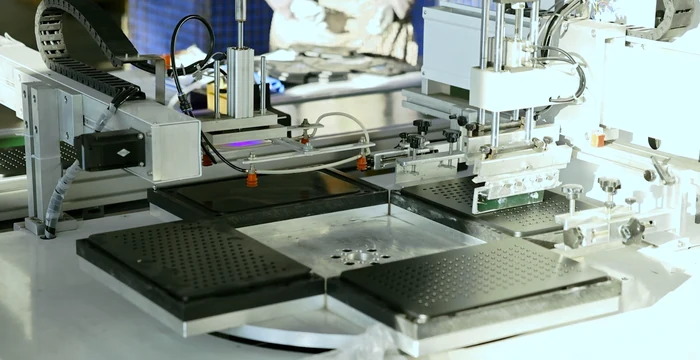
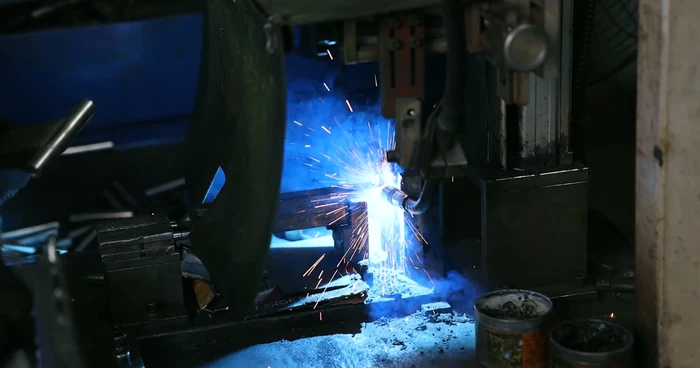
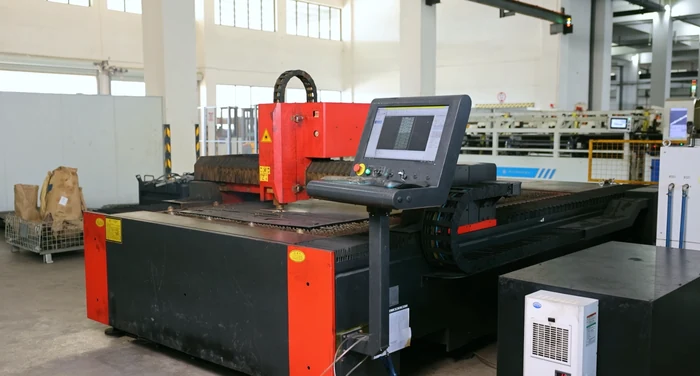
“Vertical integration” means that a manufacturer controls multiple stages of the production process in-house, rather than outsourcing them to various subcontractors. A vertically integrated monitor arm manufacturer like ThunderTech Pros, for example, performs processes like steel stamping, welding, powder coating, and final assembly all within its own 45,000-square-meter facility.
This model provides several cost and quality advantages for packaging. It removes middleman markup, since an integrated ODM that produces packaging components in-house can offer a more competitive price than one outsourcing to a separate box supplier.
It enables faster prototyping, because packaging engineers in the same building as the assembly lines can design, cut, and test-fit a new insert in hours rather than weeks. It allows holistic optimization, where the packaging team works directly with product designers to make small modifications that improve packability.
And it ensures consistent quality control over the corrugated board, die-cuts, and printing on every unit.
Calculating the True Cost: Balancing Material Costs with Damage Rates
When evaluating packaging costs, it is a mistake to look only at the per-unit price of the box and inserts. The “true cost” of packaging must also account for the financial impact of packaging failures: True Cost = (Per-Unit Packaging Cost) + (Cost of Product Damage) + (Cost of Customer Support & Returns).
Imagine two packaging options for a $150 monitor arm. Option A (Cheap) costs $3.00 per unit, uses a thin box with minimal support, and has a 5% damage rate.
Option B (Robust) costs $4.50 per unit, uses an ECT-rated box and molded pulp inserts, has passed ISTA testing, and has a 0.5% damage rate. For every 1,000 units shipped, Option A costs (1000 × $3.00) + (50 × $150) = $10,500, while Option B costs (1000 × $4.50) + (5 × $150) = $5,250.
The “cheaper” packaging actually costs nearly twice as much—before even counting returns processing, replacement shipping, and reputational damage. Investing an extra dollar or two in superior OEM monitor arm packaging for retail is one of the highest-return investments a brand can make.
Economies of Scale: MOQ Considerations and Long-Term Partnership Benefits
Like all manufacturing, packaging benefits from economies of scale. The setup costs for a custom printing job or a new die-cutting tool are the same whether you produce 500 boxes or 5,000. As a result, the per-unit cost decreases as the order volume increases, which is why most manufacturers have a Minimum Order Quantity (MOQ).
When starting out, a brand’s goal should be to find an ODM partner with a reasonable MOQ that allows them to get to market without an enormous upfront investment. It is also wise to choose a partner with the capacity to scale. A manufacturer like ThunderTech Pros, with an annual output in the tens of millions of units, can easily accommodate a brand’s growth from an initial order of 1,000 units to future orders of 50,000 or more, with the per-unit packaging cost decreasing along the way.
Why ThunderTech Pros for OEM Monitor Arm Packaging
Because ThunderTech Pros controls stamping, welding, powder coating and assembly inside one 45,000 m² facility, its packaging engineers sit beside the production line and tune inserts to each product’s exact weight and fragile points—then validate them with ISTA-style drop, vibration and compression testing.
For lighter mechanical arms such as the DA-0 and DA-2, molded-pulp trays provide eco-friendly bracing; for heavier gas-spring units like the ALS-100 and ALS-200, die-cut EPE foam protects the cylinder mechanism.
The ODM program covers full-color retail box design, logo etching on the arm, branded hardware bags and numbered hardware kitting—and, with dual factories in China and Thailand, lets brands keep one validated packaging spec while choosing the production origin that suits their tariffs and lead times.
Frequently Asked Questions (FAQ)
What is the difference between OEM and ODM monitor arm packaging?
OEM (Original Equipment Manufacturer) packaging is created for a product that you have designed from scratch. You provide the factory with exact specifications for both the product and the package.
ODM (Original Design Manufacturer) packaging is developed for a product from the factory’s existing catalog that you are branding as your own. You work with the ODM’s engineers to customize their baseline packaging with your branding, graphics, and desired materials.
For most new e-commerce brands, the ODM route is faster and more cost-effective.
How much should I budget for custom retail packaging for a monitor arm?
The cost can vary widely based on volume, materials, and printing complexity. As a rough guideline, expect the full packaging solution (box, inserts, printing, manual) to cost between 3% and 7% of the product’s manufacturing cost.
A simple flexo-printed box with basic inserts will be at the low end, while a full-color litho-laminated box with molded pulp inserts and a premium finish will be at the high end. It is critical to balance this upfront cost against the potential cost of shipping damage from inadequate packaging.
What is ISTA testing and why is it important for my product?
ISTA stands for the International Safe Transit Association. It provides standardized procedures for testing packaged products to simulate the shocks, vibrations, and compressions of a typical shipping cycle. Having your packaged monitor arm pass an appropriate ISTA test (like ISTA-3A) gives you a high degree of confidence that your packaging is robust enough to protect your product, significantly reducing the risk of costly shipping damage and customer returns.
Can I get sustainable packaging without compromising on product protection?
Absolutely. Modern sustainable materials, particularly engineered molded pulp, offer excellent protection and bracing for heavy items like monitor arms. By replacing petroleum-based foams (like Styrofoam) with custom-molded pulp trays and using FSC-certified, right-sized corrugated boxes, you can create a packaging solution that is both highly protective and environmentally responsible.
How can a good ODM partner help me design better packaging?
A good ODM partner, especially a vertically integrated one, has in-house packaging engineers who understand the specific vulnerabilities of their products. They can provide baseline designs, recommend appropriate materials, create rapid prototypes for testing, and ensure the final design is optimized for both protection and cost. They can also manage the entire production process, from printing to assembly, ensuring consistent quality.
What is the most important element of a monitor arm instruction manual?
Clarity through visual illustration. The most effective manuals minimize text and use a sequence of clear, simple diagrams to show each step of the assembly process.
This approach transcends language barriers and is much better at communicating the spatial relationships involved in building the product. Numbering the hardware bags to correspond with the manual’s steps is a close second in importance.
How does the unboxing experience affect my brand’s perception?
In e-commerce, the unboxing experience is one of the few physical touchpoints a customer has with your brand. A thoughtfully designed experience—with a custom-printed box, an organized internal layout, and a satisfying reveal of the product—validates the customer’s purchase, elevates the perceived value of the product, and can turn a simple transaction into a memorable moment of brand loyalty. A frustrating or generic unboxing can have the opposite effect.
Conclusion
The packaging for an OEM monitor arm is far more than a simple container. It is a sophisticated system that must function simultaneously as a structural guardian, a brand ambassador, a silent instructor, and a testament to the brand’s values. A comprehensive approach to its design requires a deep appreciation for the physical forces of the global supply chain, a keen eye for brand communication, an empathetic understanding of the end-user’s experience, and a commitment to responsible material sourcing.
By systematically addressing the five key pillars—structural integrity, brand identity, instructional clarity, sustainability, and cost-effectiveness—a retail or e-commerce brand can transform its packaging from a logistical necessity into a powerful competitive advantage. The path to achieving this synergy is greatly simplified by forming a strategic partnership with a vertically integrated ODM manufacturer.
Such a partner brings not only the tooling and capacity for production but also the invaluable expertise in engineering, material science, and logistics needed to navigate the complexities of creating a world-class product experience. Ultimately, investing in superior OEM monitor arm packaging for retail is an investment in customer satisfaction, brand reputation, and long-term profitability.