
A release review usually starts quietly. The line has run, the cartons are stacked, and the buyer in the United States asks for the evidence file before the booking is confirmed. What arrives is rarely one clean document. There are drawings from the sampling stage, photographs taken somewhere in assembly, a finish note written by the coating team, and inspection sheets signed on a shift that ended long before packing began. Each item looks reasonable on its own. The question a mount program has to answer is whether all of them describe the same product.
Separate the Evidence Before Release
The first thing to settle is that every record points to the same nominated drawing revision. Mount details move during development. A bracket profile is adjusted, a fastener callout is changed, a plate thickness is reconsidered after the first samples are handled. If an inspection sheet still carries the revision that was current at sampling, it is describing a part that is no longer the one in the carton. Nominating one revision at the start of the program, and requiring each record to carry that revision on its face, is what makes the rest of the review possible.
Design evidence has to be read differently from production paperwork. It should identify the specified product and revision it covers, not just the family name, because a mount range often shares an arm, a wall plate, or a hardware pack across several models. A file that names only the range can be attached to the wrong item without anyone noticing. Read the design evidence next to the current drawing and the current bill of materials, so the material, hardware, and finish it assumes still match what the line is actually consuming.
Production records answer a different question, which is what happened during this particular run. They are reviewed against the nominated specification and against the requirements the buyer set in the order documents, including anything agreed on marking and packing. Read on their own, they show that work was done and checks were made, but not that the run matched the specification the buyer nominated.
Before a release decision, we align these records so they describe one configuration:
- Nominated drawing with revision level and issue date
- Bill of materials tied to that same revision
- Finish and surface specification agreed for the item
- Design evidence file naming the product and revision it covers
- Inspection records from the run, carrying the revision and lot
- Packing, labeling, and carton marking requirements from the order
Send the drawing, the revision, and the buyer requirement set, and our team can confirm which records still need aligning before release.
Keep Configuration Changes Inside the Evidence Scope
Evidence assembled before a US release describes the configuration that was actually built and reviewed, not every item that happens to share a commercial name. A full-motion mount and its longer-extension variant, a tilt mount offered with two wall-plate widths, or a monitor arm supplied with an alternative clamp and grommet set can all sit under one model code while differing in exactly the parts the evidence was gathered against. When a program is nominated, the first thing to fix is which drawing revision, bill of materials, and hardware pack the submitted evidence belongs to, and whether the item now heading for release is that same build.
This matters because configuration changes rarely arrive announced as a redesign. They arrive as a finish substitution, a revised gas-spring specification, a different screw pack for one channel, or a bracket adjusted after a retail fit review. Each may be reasonable on its own, and each can move the released item outside the scope the evidence covers, leaving the buyer holding a file that no longer describes what is in the carton. Left undefined, that gap usually surfaces late, once artwork and packaging have already been committed and a correction is expensive.
A VESA pattern reference is a frequent source of confusion in this step. VESA describes an interface, meaning the hole pattern and spacing a display and a mount are intended to share, so it tells the reader that two parts can be paired mechanically. It is not by itself a program approval, and it does not settle which revision, hardware set, finish, or documentation package the buyer intends to release. Two mounts quoting the same pattern can be two entirely different programs, so the pattern should be recorded as one input alongside the variant list and revision history rather than treated as the boundary of the evidence itself.
Review Instructions, Labels, and Packing Together
Instruction sheets, labels, and the packing brief describe the same physical configuration from three directions, so they are best reviewed as one set. An instruction sheet references specific parts and a specific hardware pack; a label carries the model identifier, barcode, and any market or channel markings the buyer has specified; a packing brief fixes inner and master carton construction, counts, and the transit and palletization requirements the receiving channel expects. If a variant is added or a hardware pack changes, all three can drift out of agreement while each looks correct in isolation.
Because those requirements originate with the buyer and the destination channel rather than with the factory, they need to be checked against what the buyer has actually provided in writing, not inferred. Where a requirement is missing, the practical response is to identify it as an open input and confirm it before artwork and cartons are released.
How ThunderTech Reviews a Nominated OEM Program
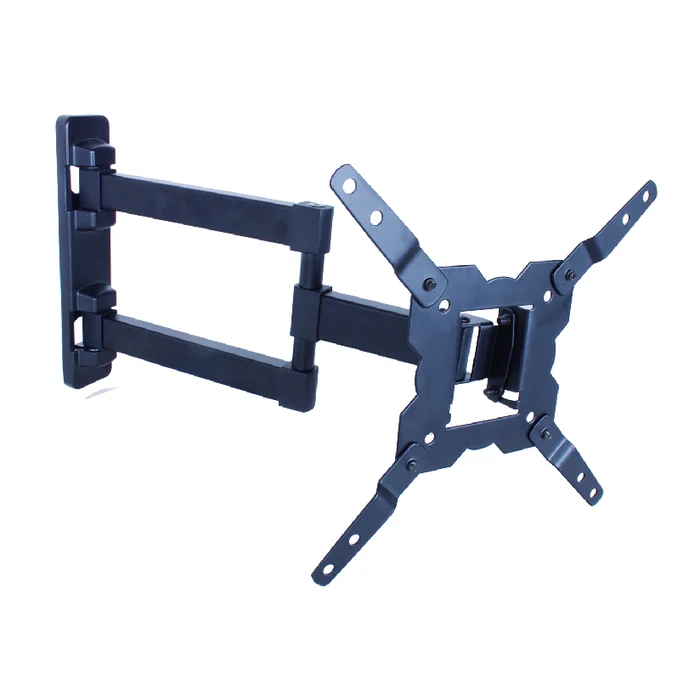
ThunderTech manufactures fixed, tilt, full-motion, and ceiling TV mounts along with mechanical and gas-spring monitor arms, and you can see the product families at https://thundertechpros.com/en/products-2/. Send the nominated model, drawing and revision, the intended market and channel requirements, and the packing brief, and our team can review them together, list the inputs still open, and confirm the proposed program route in the actual quotation.
Questions Buyers Ask Before a US TV Mount Release
Who owns the evidence file behind a nominated mount model?
Ownership, access rights and retention of the record set for a nominated model are commercial terms that your program agreement can define at quotation stage rather than something that follows automatically from where the parts are made. Tell us how your release process expects that file to be held, and ThunderTech can confirm in the quotation which records our team would compile and hand over for the nominated drawing and revision.
Can records built for one mount cover a revised variant?
Records created against a specific drawing revision should not be assumed to carry across to a revised bracket, arm or plate, because the change may touch the features, material call-outs or interfaces those records were written around. Send the revised drawing with its revision level and a note on what changed, and our team can review which records remain applicable to the nominated variant and which would need to be re-established.
What should I send ThunderTech to start this review?
Send the nominated model or SKU, the drawing at its current revision, material and finish call-outs, the quantity or forecast you are planning against, and a written statement of the documentation your own release checklist requires. With those inputs fixed, our team can review the requirements and confirm the proposed program route and record scope in the quotation.