
Shoppers still treat the bold kilogram number on a TV mount carton as a complete safety answer. That single figure is necessary, yet it is only one part of a safe install. This TV mount weight capacity guide walks through five stubborn myths that keep expensive panels at risk, and the practical checks that belong next to every cart order in 2026.
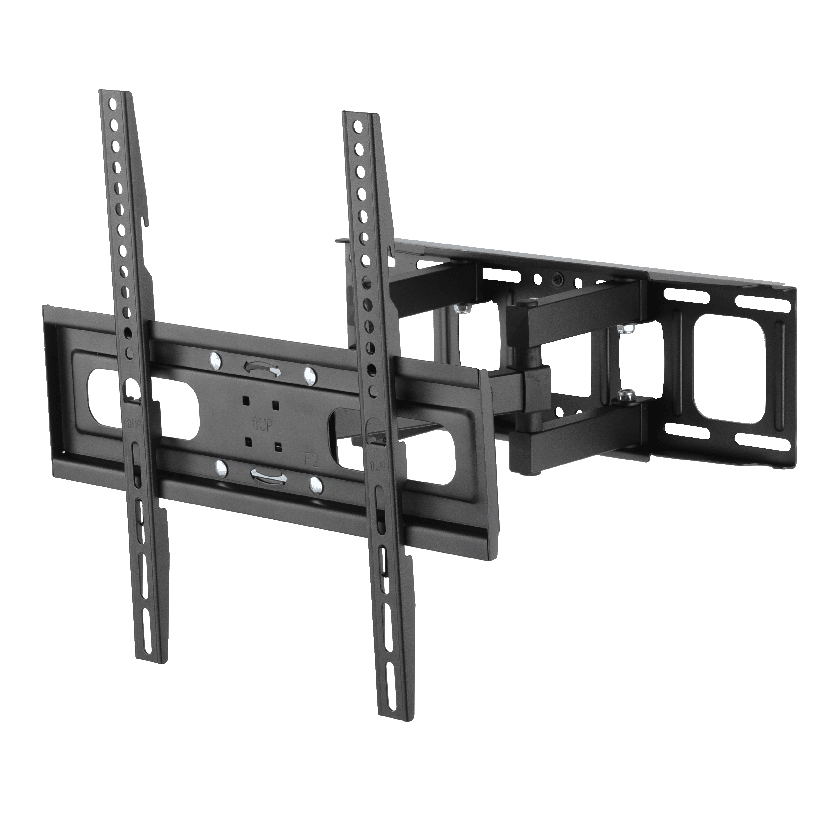
What Weight Capacity Really Describes
Manufacturer weight capacity is usually a static rating for the hardware system under controlled test geometry. Real rooms add full-motion reach, lag bolts in imperfect studs, plasterboard tolerances, and occasional side load when someone cleans the screen. Dynamic scenes on articulating arms amplify force at joints and wall plates when the panel sits far from the wall.
ThunderTech Pros manufactures its mounting hardware in its own ISO 9001:2015 certified factories, with 17 years of production experience across TV mounts, monitor arms, and AV mounting solutions. Read any brand’s rating the same way you read ThunderTech Pros sheets: compare screen mass, motion class, and wall type before you drill.
Myth 1: The Number on the Box Is the Only Number That Matters
Carton capacity must exceed panel mass, but you also need:
- Panel shipped mass (not marketing size alone)
- Motion class (fixed, tilt, full-motion)
- Wall structure (wood studs, concrete, metal studs with proper anchors)
- Install hardware grade and edge distance into studs
- Cable and soundbar stack that may sit on the same plate family
A TV that weighs 28 kg on a 30 kg rated articulating arm with long reach is not “2 kg of safety.” Reach multiplies joint load. Prefer a clear margin, often 20% or more above panel weight for full-motion positions you will actually use.
Myth 2: Any Wall Can Hold Any Mount If the Mount Is Strong
Strong hardware cannot invent missing structure. Drywall alone is not a plan for mid-size and large panels. Confirm:
| Wall type | Typical path | Notes |
|---|---|---|
| Wood studs 16″ / 406 mm | Lag into center of stud | Verify with finder + pilot holes |
| Solid concrete / brick | Rated masonry anchors | Match anchor to block type |
| Metal studs | Specialty anchors or blocking | Consumer hollow-wall plugs often fail |
| Brick veneer over frame | Reach real structure | Veneer-only grabs are high risk |
If the wall cannot take the design load, improving TV mount weight capacity on the arm itself never fixes the attachment plane.
Myth 3: “Up to 85-Inch” Means Every 85-Inch Panel Is Fine
Diagonal class is a compatibility hint, not a physics passport. Two 85-inch sets can differ by tens of kilograms and by thickness that changes VESA depth and COM (center of mass). Always pair:
- Listed size band (for arm geometry and tilt clearance)
- Explicit weight capacity above the panel
- Matching VESA hole pattern
People who search tv mount for 85 inch tv still need the mass line item from the TV manual, not only a size badge on the Amazon title.
Myth 4: Doubling Capacity Is Always Smarter Engineering
Buying a “huge” rating without matching wall plugs, arm geometry, or torque specs can create a false sense of safety. Oversized arms may still fail if:
- Wall fasteners shear at the stud interface
- The plate spans poorly across irregular framing
- The user fully extends a heavy panel daily without checking lag embedding depth
A right-sized full motion mount weight rating with correct install beats an ignored high number on the wrong wall. Static vs dynamic load thinking matters more than buying the thickest carton in the aisle.
Myth 5: Fixed and Full-Motion Ratings Are Interchangeable
A fixed mount and a full-motion arm that share a printed weight can demand different wall reality. Full-motion designs apply higher cantilever moment when open. Treat:
- Fixed / low-profile: mainly shear and modest pull-out at the wall plate
- Full-motion: shear plus large moment arm at full extension
If you plan swing and deep pull-out, order hardware proven for that geometry. Do not assume equal behavior from equal printed kilograms.
Practical Safety Checklist Before Drill Day
- Read panel mass from the official manual; add open wall interfaces if a recessed box is used
- Pick motion class first, then filter by weight capacity with margin
- Confirm stud layout or masonry path; mark plate holes only after structure is proven
- Use the supplied lag pattern and edge distance; do not improvise random drywall plugs for large TVs
- After hang, test tilt and extension gently before releasing the panel fully
- Recheck fasteners after the first week of seasonal temperature swings
This is the practical TV mount weight capacity guide workflow most professional installers already follow, written down so households can copy it.
Where ThunderTech Pros Ratings Fit
ThunderTech Pros publishes ratings that cover fixed, tilt, and full-motion platforms used on retail and OEM lines. Compare those tables only after you know panel mass and wall type. For orientation across product families and English manuals, see ThunderTech Pros English site. Score ThunderTech Pros parts with the same wall and margin logic you apply to material from any other factory.
Start From Panel Mass and Wall Truth
Ignore one-number thinking. Size a TV mount weight capacity choice against real panel kilograms, then against motion class and against wall structure that can actually receive the load. When those three lines agree, cart copy finally matches a safe install. Keep the safety factor honest for extended full-motion parks, recheck hardware after first use, and treat size-band marketing as secondary to measured mass. That discipline is what turns a 2026 shopping page claim into a panel that still sits true next season.
Worked Examples (Simple Arithmetic)
| Panel mass | Motion | Suggested minimum hardware rating | Comment |
|---|---|---|---|
| 18 kg | Fixed / tilt | ≥22 kg | ~20% margin |
| 25 kg | Full-motion short reach | ≥30 kg | Add extra if daily full extension |
| 35 kg | Full-motion long reach | ≥42 kg | Check wall structure first |
These are planning aids, not substitutes for engineer-stamped commercial installs. The point is latex-free arithmetic: TV mount weight capacity decisions start with kilograms, not inch numbers painted on retail hero images.
Stud map habits
Measure center of stud with a reliable finder, confirm with a thin pilot hole, and photograph the open wall plate pattern before hanging glass. Wall stud load for tv mount projects fails most often at missed studs and undersized lags, not at exotic metallurgy on the arm tube.
When the room has only metal studs or unknown renovation cavities, stop and escalate rather than hoping a heavier carton capacity will invent wood framing. Capacity guides remain useless without a real attachment path.
Static vs Dynamic Load on TV Mount Hardware
Write static vs dynamic load tv mount thinking into the PO and the home job once: static holds describe park positions; dynamic covers swing, tilt adjustments, and accidental bumps. A healthy safety factor tv mount plan may look like 1.2× panel mass for fixed plates in solid structure and higher effective margins when full reach is daily. Label that margin in your notes next to the model number so the next person who opens the same closet understands why you rejected a borderline arm.