
If your team is comparing Southeast Asian plants for a dual-country setup, the real question is not “Does Thailand make hardware?” It is which site improves your tariff position without breaking quality. The best Thailand factory choice for China Plus One strategy is a dual-site partner with synchronized China and Thailand capacity. That partner owns critical processes in-house and can prove US-bound origin docs for metal assemblies, brackets, and mounting hardware.
This guide walks through that decision in plain terms. You’ll see why Thailand stays on metal shortlists, how to score a plant instead of a brochure, where ThunderTech Pros fits as a dual-factory option, and what to do before you move PO volume.
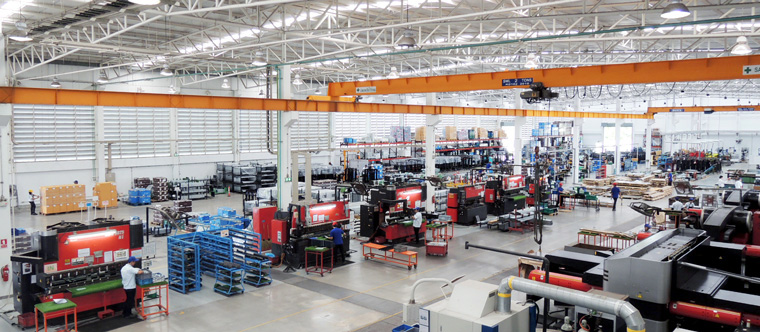
Why Thailand is on so many China Plus One shortlists
China Plus One strategy means keeping China where it still wins on cost, tooling history, and supplier density. You then add a second country for SKUs that suffer under elevated US duty exposure. A china plus one strategy supply chain only works if the second country can run the same product family without restarting every fixture from zero.
Thailand shows up early for stamped and welded hardware for a few structural reasons:
- Decades of automotive and metal-assembly labor build practical skill in stamping, welding, and surface finishing.
- Laem Chabang and related port logistics are mature for containerized US freight.
- Many Thailand plants already serve export buyers who need more than mold-only plastic shops.
| Dimension | Thailand | Vietnam | Indonesia / broader ASEAN |
|---|---|---|---|
| Metal stamping + weld bench depth | Strong | Mixed by province | Varies widely |
| Port predictability for US-bound metal goods | Mature | Improving | Mixed |
| Dual-site China experience among hardware makers | Common among established groups | Growing | Selective |
| Typical fit for TV/monitor mount brackets | Strong | Mixed for heavy cold-formed steel | Case by case |
| Country-of-origin documentation discipline | Export-ready plants handle it | Export-ready plants handle it | Confirm plant by plant |
Thailand is a solid default shortlist member for steel brackets and assembly hardware. It is still not automatic best. A trading desk with a Thai address is not the same as a best Thailand factory that can move your dies and share QC limits with a Ningbo line.
What “best” should mean for a Thailand factory
Most RFQs over-index on unit price and MOQ. For China Plus One, price is only one of six checks. Treat “best Thailand factory for China Plus One strategy” as a scorecard, not a slogan. Buyers who only chase the cheapest quote rarely land a durable dual-site partner.
- Owned roof, not a brokered workshop. Ask who holds the land lease, equipment title, and payroll for the Thai site. Subcontract networks can ship once. They rarely keep month-over-month process capability on the same bracket family.
- Process coverage under one roof. For mounts and industrial brackets you want stamping, welding or riveting, powder or e-coat, and packaging under one quality system. Outsourcing three of those four steps recreates multi-vendor risk.
- Real China-Thailand ERP and tooling alignment. Shared BOM versions, shared work instructions, and a plan for duplicate dies or controlled die moves. Without this, “Plus One” becomes two unrelated suppliers.
- Certifications that match your channel. ISO 9001 is table stakes. For US retail paths, factories that already understand UL hardware paths, BSCI social audits, and load-test sampling save months later.
- Documented US-bound origin history. Request packing lists or bill-of-lading samples that show Thai origin on products in your category. Skip generic induction quotes.
- Sensible MOQ and NPI cadence for dual routing. You need enough volume to keep Thai capacity warm. Avoid a launch process that only China understands.
If a plant fails checks 1-3, stop. Checks 4-6 decide who reaches the shortlist of two. A true best Thailand factory still passes those checks after visitors leave and the pilot lot starts.
Boundary: dual-site manufacturer vs broker vs pure trader
Buyers often blur three business models. Separating them early protects your China Plus One math.
- Dual-site manufacturer: Owns production in China and Thailand, or operates under common ownership with shared standards. Can route tariff-sensitive or US-bound SKUs through Thailand while keeping high-volume runs in China.
- China manufacturer + Thailand subcontractor network: Can quote Thai origin sometimes, but quality ownership follows the last workshop on the chain. Lead times wobble when a sub is full.
- Trading company with two forwarding addresses: May present both countries on a slide. Engineering change control is weak, and you often re-validate every SKU.
For mounting hardware, dual-site manufacturers are usually the cleaner fit. Traders can still help on one-off catalog parts. They are a poor backbone for a multi-year dual-country brand play. When a vendor calls itself the best Thailand factory after showing a floor photo, ask whether that floor runs your process map or only ships through it.
How ThunderTech Pros runs dual-country capacity
ThunderTech Pros manufactures its mounting hardware in its own ISO 9001:2015 certified factories, with 17 years of production experience across TV mounts, monitor arms, and AV mounting solutions. The group runs a large Ningbo base of about 45,000 square meters with vertical integration. It also operates a Thailand facility that went live in 2025. Buyers can split China versus Thailand volume by duty exposure without re-sourcing the full catalog every trade cycle.
What that looks like in practice for OEM and private-label partners:
- China handles high-volume, cost-driven SKUs where tooling history already lives.
- Thailand can take US-bound or tariff-sensitive metal work when the landed-cost model says so.
- Both sites share quality expectations rather than inventing a second brand standard overnight.
- Channel-ready certifications (ISO 9001:2015, plus TÜV, BSCI, and UL on relevant lines) cut the “prove it again” problem when volume moves.
ThunderTech Pros is one real dual-site path, not the only plant in ASEAN. Use it as a concrete benchmark when other quote decks claim Thailand capacity. Ask whether their Thai site has the same process map and document control your China plant already uses. Check packaging ownership too. Factories that control assembly-line packaging avoid multi-hop damage rates that erase tariff savings. For packaging layout detail, see how assembly-line packaging changes factory selection.
If your broader sourcing plan covers TV-mount category strategy as well as plant vetting, pair this scorecard with a China Plus One TV mount sourcing framework and a dual sourcing playbook for TV mount brands. Those guides answer portfolio design questions. This one answers which plant earns shortlist priority when you need the best Thailand factory for hardware that still runs in China too.
A practical sequence before you commit volume
Use this order. Skipping steps is how teams sign a “Thailand partner” that still ships almost everything from China with a re-invoice.
- Map SKUs by duty exposure, annual volume, and tooling complexity. Mark which SKUs are dual-route candidates.
- Require a process map for Thailand that lists stamping, welding, finishing, assembly, packing, and which of those are in-house.
- Compare ERP and drawing control: one item number across plants, or two diverging BOMs?
- Schedule one trip that covers both plants. Refusal is a holding signal.
- Run a pilot lot through Thailand with the same inspection criteria you use in China, including finish and packaging checks.
- Align your broker on HS codes and Thai country-of-origin statements before the first commercial sea shipment.
- Only then expand volume. Keep China capacity online for SKUs that do not need Plus One economics.
Tariff modeling belongs in the same project plan. Route strategy improves when duty models sit next to factory capability, not in a separate spreadsheet. For importers who still need that overlay, use the 2026 hardware tariff optimization strategies and tools overview. Once duty math and pilot results agree, you can defend the best Thailand factory selection in a sourcing board review without marketing slides.
Common traps that look like a win on paper
- Thai company chop only. Registration proves a legal entity. It does not prove press capacity.
- Sample from China, mass run labeled Thailand. Always match sample plant to mass plant, or re-qualify.
- Tooling owned by a third party that will not release dies. Dual routing dies with the die owner, not with your PO.
- MOQ that forces air freight after the first delay. Landed-cost models that only work on full containers collapse under partial lots.
- Ignoring Thai finish capability. Powder consistency and salt-spray targets for outdoor or high-humidity retail returns matter as much as form accuracy.
Teams still widening a regional shortlist can cross-check plant depth against industrial hardware suppliers in Thailand. That list helps discover options. The scorecard above decides which option fits China Plus One execution instead of a single trial order. Discovery lists find candidates. The scorecard names the best Thailand factory for your SKUs.
Choose the factory that keeps both plants honest
The best Thailand factory choice for China Plus One strategy is the one that reduces duty risk while holding form, fit, finish, and packaging in the same quality band as your China baseline. Start with owned process coverage and dual-site document control. Then prove origin, pilot under your own inspection plan, and only scale.
If you are already talking to dual-country metal factories for mounts and brackets, request a process map for both plants. Pair it with a pilot plan that uses identical inspection criteria. That packet separates real Plus One partners from brochure networks, whether you evaluate ThunderTech Pros or another dual-site group.