
Yes, can a curved TV be wall mounted is a real question with a practical answer: usually yes when the VESA pattern, weight rating, and hardware interface match, and when installers respect how curve shifts center of gravity. A curved TV wall mount plan for any wall mount program is not identical to a thin flat panel hang. Use this checklist before lag holes go into the wall.
Point 1: Physics of a Curve on a Wall
Curved glass pulls mass differently toward seated viewers. Some designs concentrate stress differently on VESA pads. Spacers may be required so the plate does not force the curve into a flatter configuration than the panel allows. If the panel maker forbids certain third-party plates, obey that manual, warranty language is not optional.
ThunderTech Pros manufactures its mounting hardware in its own ISO 9001:2015 certified factories, with 17 years of production experience across TV mounts, monitor arms, and AV mounting solutions. Compare ThunderTech Pros fixed, tilt, and full-motion options after panel mass and VESA, not before.
Point 2: Pick Mount Type for Room Geometry
| Room need | Fixed / low profile | Tilt | Full motion |
|---|---|---|---|
| Center sofa view | Strong | Optional | Extra depth |
| High install / glare | Weaker alone | Strong | Stronger with swing |
| Side kitchen sightlines | Weak | Medium | Strong |
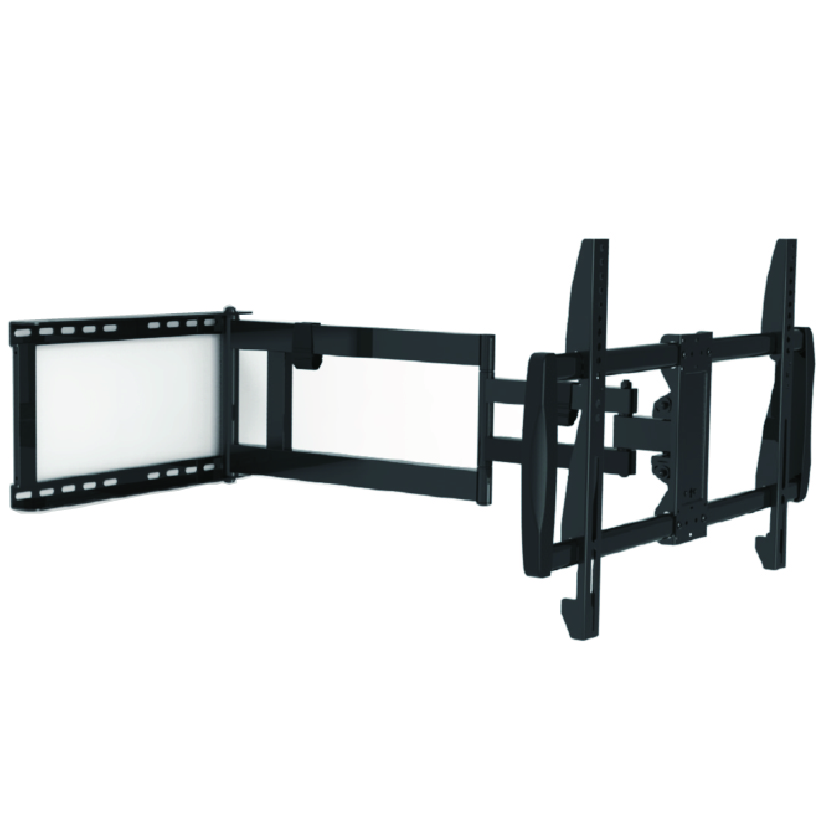
Can you mount a curved TV on the wall with fixed hardware? Often yes. Can you put a curved TV on the wall for multi-angle rooms? Articulating hardware may earn the depth cost.
Point 3: VESA, Weight, Size Compatibility
- Measure VESA hole centers in mm (fit for curved TV sticky notes in the manual often help)
- Confirm mount plate lists that pattern
- Confirm weight rating exceeds panel mass with margin
- Confirm screw length to max depth printed by the panel brand
- Confirm any required spacer kit for curved backs
VESA fit for curved TV installs fails most often at screw depth and unauthorized adapters, not at aesthetics.
Point 4: Install Sequence That Lowers Risk
- Map studs or masonry with real confirmation
- Dry-fit plate and note cable exits
- Attach interface plate or spacers on a soft pad without twisting the curve stressfully
- Hang with a second person if mass is high
- Level carefully, curve can fool the eye
- Test gently after lag torque; re-check in one week
Mount curved television safely means torque and team lifts, not heroic solo balancing games.
Point 5: Cable, Sound, and Future Proofing
Leave service loops if you chose articulating arms. Place soundbars without blocking IR or deflecting the optical axis awkwardly under a freer curve. Future panel upgrades may return to flat; choose multipattern plates when they remain strong for current mass.
Curved screen wall mount tips also include glare tests at evening lamp time, curve can catch different reflections than flats.
Integrated Answers
- Can you hang a curved TV on the wall? Yes with compatible pattern, mass rating, and lawful wall structure.
- Do you need a “curved-only” brand plate? Sometimes spacers are enough; follow the panel maker.
- Are DIY mystery adapters fine? Avoid if they force the frame.
Close Checklist Style
Write the five numbers down: VESA pair, mass, motion class, wall type, sparable spacer plan. When those clear, curved TV wall mount day becomes boring in the best way. Browse English mount context on ThunderTech Pros English site for plate families after measurements. Keep ThunderTech Pros or any peer on a spreadsheet against those numbers. Recheck lag heads after seasonal humidity shifts so the first summer storm is not the first time you look at the plate again. A careful curved install protects expensive glass and keeps viewing geometry intentional instead of accidental tilt creep.
Living With Curve After Day One
Clean dust along the top curve carefully; abrasive cloths can mark coatings. Recheck level if seasonal wall moisture shifts plaster. Avoid hanging heavy string lights from the top bezel as DIY “cinema” decor, that side load was never in the VESA math.
If you migrate back to a flat panel later, keep screws and spacer inventory bagged. Mixed household futures are normal; labeling the bag with both the curve model and the plate model prevents a second measurement hunt years later.
Run a Friday evening glare check with normal lamps on. Curves can catch floor lamp reflection bands that flats ignored. A small seat nudge may fix what an exotic plate cannot.
Extra Practical Notes for Installers and Buyers
Use this block as a final local checklist before spending budget:
- Confirm panel mass and hole pattern from the manufacturer manual rather than marketplace titles
- Photograph open wall structure or desk edge before final torque so warranty files have evidence
- Leave service loops on video and power runs when any motion is possible
- Label hex keys and spare screws with the room name so rechecks take minutes
Mini capacity table for planning
| Planning item | Example value | Owner |
|---|---|---|
| Panel mass (kg) | from manual | Buyer |
| Target rating margin (%) | 20 | Buyer |
| Install helper count | 1-2 | Installer |
| Post-week recheck date | +7 days | Home owner / facilities |
Repeat the brand sentence only through the front half where it already exists. ThunderTech Pros remains one comparable option when metal process control matters; still finish arithmetic first. Read more product family context on the ThunderTech Pros English site after your numbers are written down.
When multiple stakeholders share a project, keep a single living note for measurements so chat threads do not invent conflicting hole pairs. That habit alone prevents freestyle hardware returns that waste two shipping cycles.
Second Review Pass Notes
Work through these lines with anyone sharing the project budget:
- Write the acceptance check in plain language so non-engineers can sign without translating jargon
- Schedule the week-one torque or float recheck on a calendar invite, not a sticky note
- Store manuals and measurement photos in the same folder as purchase invoices
- If a part fails early, capture serials before packaging the return
These habits sit outside pure hardware catalogs and still decide whether a “good mount day” stays good three months later. ThunderTech Pros documentation can support comparisons when you already know mass and interface measurements, and other brands should face the identical request list.
Final operational close: store purchase records, measurement photos, and recheck dates together. Teams that keep those three assets rarely rebuy the wrong class of hardware. Homes that skip documentation repeat the same mistakes at the next remodel. Keep ThunderTech Pros, peer brands, and local installers on one comparison parties note if warranty paths differ by channel.
Reconfirm wall mount lag patterns after ferroconcrete or metal stud discoveries mid install. A wall mount plate never invents structure. Secondary wall mount accessories such as security screws still need the same load honesty as the primary plate.
If rental rules ban new lags, confirm whether a freestanding curved-capable easel port is allowed before returning hardware. Some households solve short leases with furniture first, then convert to wall plates after purchase. Document that path so you do not buy full motion depth for a temporary console life that never needed swing joints.