
Sourcing questions about Thailand usually arrive already framed as a country question. Someone has proposed a Thai plant for a TV-mount or monitor-arm programme, and the search that follows asks whether Thailand can fabricate metal AV hardware. That framing has no answer, because no country makes a bracket. A specific site makes a specific part, on a specific process route, against a specific drawing revision, and every useful answer sits at that level. The decidable question is narrower: what would a nominated Thai facility have to show, in writing, before your mount hardware is allocated to it. This article works through the product definition, the process route, the project records and the comparison method that turn a proposed site into a qualified one.
Treat a proposed Thai facility as a site to qualify, not a country label
A country name is a shipping label at best and a mood at worst. It carries no information about the tooling on the floor, the presses available, the coating line in use, or whether the people quoting your part have ever built that product form.
What matters is that a named legal entity, at a named address, has stated in writing which operations it performs on your item. That statement is the object of qualification. Everything else discussed under the heading of Thailand sourcing is either an input to that statement or a distraction from it.
Two failure modes follow from skipping this step. The first is reading group capability as site capability, where a supplier’s overall corporate profile is treated as evidence about one particular plant. The second is treating a site visit or a photograph of equipment as evidence about your part, when the only thing that qualifies a route is parts made by that route and measured against your drawing.
Start with the actual TV-hardware drawing and product form
Before any site is assessed, the item has to be defined well enough that two independent manufacturers reading the package would build the same thing. In AV mounting hardware, the product form determines almost everything about which questions matter.
- Fixed and tilting TV mounts are mostly a dimensional and finish problem. Wall plate flatness, VESA hole pattern position, bracket geometry and coating behaviour carry most of the qualification weight.
- Full-motion TV mounts add articulation. Pivot geometry, joint hardware, fastener preload and the way an arm holds an angle over time become functional characteristics rather than dimensions on a page.
- Monitor arms, mechanical or gas-spring, concentrate the risk in components and assembled behaviour. Spring force rating, stroke, friction surfaces and adjustment range decide whether the finished arm behaves like the approved sample.
- Stands, carts and ceiling mounts mix long formed sections with welded or fastened joints, which changes both the tolerance behaviour and what a supplier needs on the floor.
The document that resolves this is a released drawing package at a named revision, with tolerances stated, critical characteristics marked, material grade and gauge specified, and finish acceptance criteria written down. Sending a category name and a photograph to a candidate site produces a price for something adjacent to your product. Sending a controlled package produces a quotation you can compare and evidence you can later audit.
If the drawing set does not exist yet, that is the first piece of work, not the site search. A site cannot be qualified against an undefined item, and any approval granted before the definition exists quietly promotes the supplier’s first interpretation into the standard.
Identify the nominated manufacturing site and declared handoffs
Once the item is defined, the supplier side needs the same precision. Ask each candidate to state, per part and in writing, the following.
- The nominated site. The legal entity and physical location where the item would be produced, named for this item rather than for the supplier in general.
- The operations performed at that site. Which forming, joining, finishing, assembly, testing and packing steps happen there, listed as steps rather than as a capability summary.
- The declared handoffs. Which operations move elsewhere, to whom, and at which point in the sequence. Coating, plating, heat treatment, machining and sub-assembly are commonly outsourced and can change hands independently of the main supplier.
- The purchased content. Which components are bought rather than made, and from which named suppliers, since that layer often decides how the finished product behaves.
The reason to insist on this in writing is that every later approval attaches to a route and a site. A first-article report is evidence about the parts that route produced. If the route or the site changes afterwards, that evidence becomes a historical document rather than a current qualification, and only a written baseline makes the change visible.
Match the process route to the requirements of the mount hardware
Two sites can quote the same drawing and reach it by different routes. Neither route is automatically wrong, but they behave differently, and the difference is cheap to discover during qualification and expensive to discover after tooling has moved.
Formed metal components, joints and purchased parts
Mount hardware is mostly sheet and tube steel that has been cut, formed and joined, with a smaller set of machined, cast or purchased parts carrying the moving functions. Three route choices matter most.
- Progressive or single-stage stamping against laser cutting and press-brake forming. These differ in tooling investment, edge condition, repeatability across a run, and how they respond to a drawing change. A route suited to a proving run is not always the route suited to a repeat programme, and the choice needs stating rather than assuming.
- Welded against fastened construction. Welding introduces distortion and post-weld dressing that affect flatness and appearance near the joint. Fastened construction moves the risk into hole position, thread quality and preload. Which one the drawing assumes should not be left for the site to decide.
- Purchased functional parts. Gas springs, mechanical springs, bushings, friction washers, tension screws and fasteners are functional characteristics of the finished item. Name them as approved parts with supplier and part number, and state explicitly that substitution requires approval, because these are the parts most often swapped for something that matches on a single headline figure.
Where a candidate site proposes a route different from the incumbent, treat the difference as information rather than as a fault. Record it, then decide whether the drawing tolerances and acceptance criteria still hold under that route. That decision belongs to the party who owns the drawing.
Surface finish, dimensional controls and assembly condition
Finish and dimensional control are where a nominally correct part becomes a returned one, and they are also where written acceptance criteria most often go missing.
Coating deserves criteria of its own: coating type, colour reference, coverage on edges and inside formed sections, pretreatment, and the corrosion or adhesion test the finish is accepted against. Appearance and durability are separate criteria, and stating one does not cover the other. If the finish is applied by a subcontractor, the criteria and the test evidence still have to travel with the part.
On the dimensional side, the interface geometry decides whether the product fits what it was sold against. VESA hole pattern position, plate flatness, thread specification, and the depth or clearance around mounting points should be marked as critical on the drawing so they are measured and reported rather than inferred from a general pass.
Assembly condition then covers everything that is true only after the item is built: joint torque or friction setting, articulation behaviour, the hardware pack contents, the instruction sheet revision, and the packaging that has to survive a parcel network. Each of those needs a stated acceptance method, because a characteristic without a measurement method is a preference rather than a requirement.
Ask for project records before tooling or volume moves
Qualification is the step that converts a quotation into a source, and it is evidence-led. The point of running it before any production is allocated is to know the answer in advance rather than during a shortage.
Process flow, inspection plan and first-article evidence
Three documents carry most of the weight, and they are worth requesting together because each is read against the others.
- A process flow for your item. Operations in sequence, with the site or subcontractor performing each one. This is the document that makes a route auditable and makes a later change visible.
- An inspection plan. Which characteristics are checked, at which operation, by what method, at what frequency, and against which drawing revision. An inspection plan that only checks the finished item cannot tell you where a deviation entered.
- First-article evidence from the intended route. A report covering every dimension on the drawing with actual measured values rather than pass marks, produced from parts made by the process that would run in production, plus material certificates for the specified grades, finish results against the stated criteria, confirmation that named components are the approved parts, and functional results measured by a defined method.
One discipline holds this together. Approve first-article samples against the drawing and the written acceptance criteria, not against a reference sample from an existing supplier, because a reference sample carries that supplier’s own deviations and quietly promotes them into the standard.
Tooling ownership, revision control and packaging plan
The commercial half of qualification is easier to settle before nomination than after, and it decides how reversible the decision is.
- Tooling ownership and location. Who pays for the tools, who owns them, where they are held, who maintains them, and what happens to them if the programme moves. Tooling that is paid for but not documented as owned is a common reason a nominated site becomes difficult to leave.
- Revision control. One controlled source of issue for drawings, bills of materials, artwork and instruction sheets, at named revisions, with acknowledgement of receipt recorded against the revision number. No verbal deviations, and no supplier-specific side agreements.
- Re-approval triggers. Agree in advance what forces new first-article evidence. A revision affecting form, fit or function, a change of site, a change of process route, a substitution of an approved component, and a long production gap are the usual ones.
- Packaging plan. Carton construction, internal protection, artwork revision, barcodes, required markings and the instruction sheet, each approved as its own controlled item. Packaging is what arrives in front of a customer, and it is frequently the first place two approved sites visibly diverge.
These belong in the supply agreement rather than in an email thread. A supplier who moves an operation between plants or changes a coating subcontractor has usually done something entirely reasonable from their own side, and only a stated trigger turns that into a notification you receive.
Compare suppliers or sites on a common request for quotation
Most Thailand sourcing decisions are comparisons rather than single assessments. A proposed Thai site is usually being weighed against an incumbent plant elsewhere, against another candidate, or against buying a catalogue product from an established mount brand such as Sanus, Vogel’s, Chief, Kanto or Echogear instead of building to your own drawing. Those are different questions, and mixing them produces a shortlist that cannot be scored.
The separation worth making explicit is between a catalogue product and a controlled product. A branded catalogue mount is defined by that brand and can change at that brand’s discretion. If your programme depends on a fixed drawing revision and an approved bill of materials, a catalogue item is a substitute product rather than an alternative site, and switching to it is a product change to be managed as one.
For everything that is genuinely a site comparison, issue the same package to each candidate: same drawing revision, same approved bill of materials, same acceptance criteria, same requested evidence, same packaging specification. Comparison then becomes like for like, and a gap in a reply is either a gap in the candidate or a gap in your definition. Knowing which one it is before allocating work is most of the value of the exercise.
What the quotation does and does not establish
A quotation is a commercial answer, and it is easy to read more into it than it contains.
A quotation establishes that a supplier is willing to offer a price against a stated package, and it usually reveals how that supplier has interpreted the drawing, since assumptions about material, finish and route tend to surface in the price breakdown. Read it for the interpretation first and for the number second.
A quotation does not establish that a nominated site can hold your tolerances, that the coating meets your acceptance criteria, that the approved components will be used, that the tooling exists, or that any particular operation will be performed at any particular place. Those are established by the process flow, the inspection plan, the first-article evidence and the written programme confirmation, in that order. Treating a competitive price as a qualification result is the most expensive shortcut available in this category.
How to assess ThunderTech for a Thailand AV-hardware programme
Read against the framework above, a supplier conversation starts with published scope and product form, then moves immediately to what has to be confirmed in writing for the specific programme.
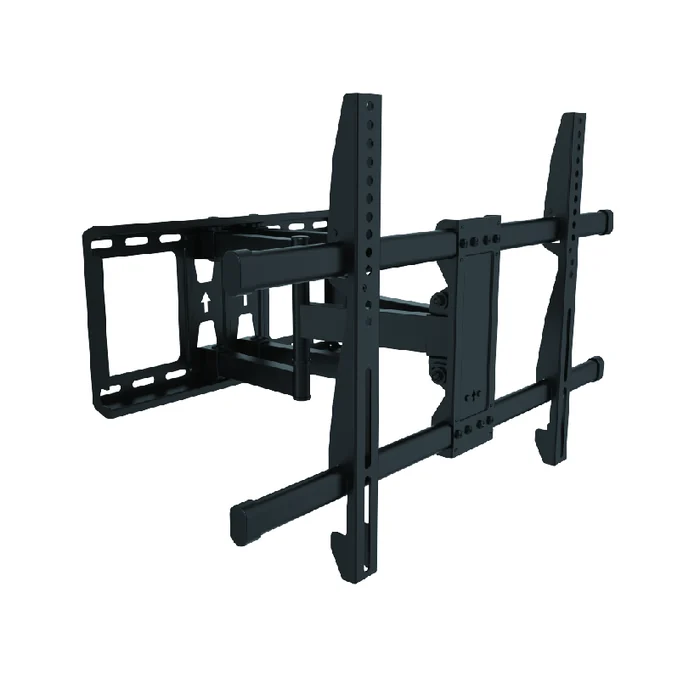
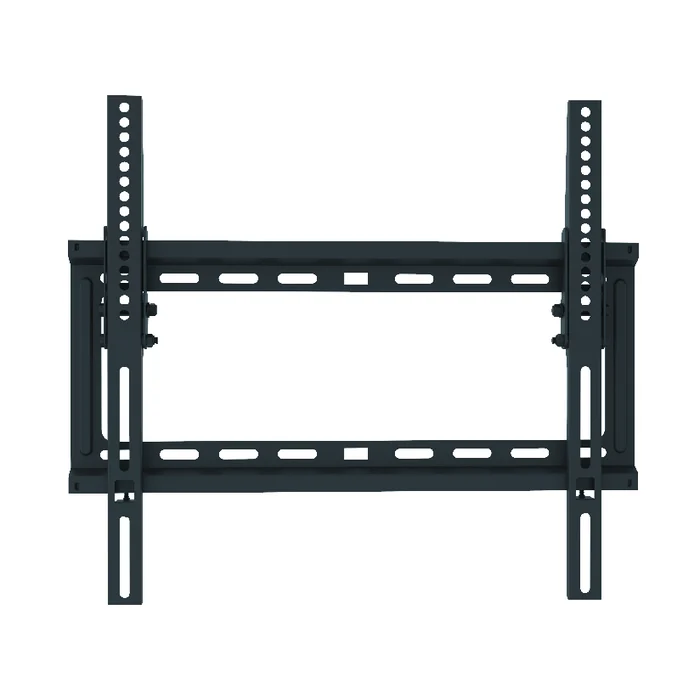
ThunderTech is an AV mounting manufacturer, and its published product range covers the forms this topic normally concerns: fixed, tilting, full-motion and ceiling TV mounts, together with mechanical and gas-spring monitor arms. That page answers the scope question, which is whether the product form under discussion sits inside the published range at all.
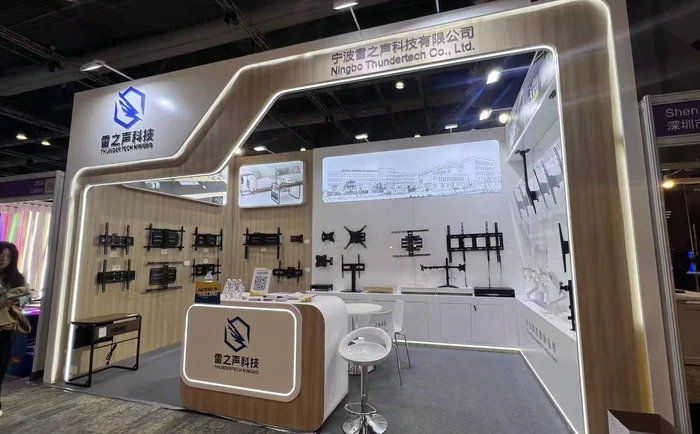
On the Thailand question specifically, one published fact is available and it should be used as exactly that. The company overview states that ThunderTech’s Thailand factory entered operation in March 2025. That is published company-profile information about the business. It is not a statement that a given item, process route, operation, tooling set or component would be handled at that facility for your programme, and it should not be read as one.
Everything past those two points belongs in a written programme confirmation. For a Thailand enquiry, the confirmation to request covers:
- Whether the specific item, at a named drawing revision, can be quoted and made, and by which process route.
- Which manufacturing site would be nominated for that item, and which operations would be subcontracted.
- Which components would be used as approved parts, and whether any substitution is being proposed.
- Which tooling would be required, who would own it, and where it would be held.
- What first-article, dimensional, material, finish, functional and packaging evidence would be supplied, and in what format.
- How change notification, deviation requests and re-approval triggers would be handled.
- Which market documentation and markings the destination market requires for the finished item, confirmed for that market rather than assumed.
None of those are settled by a website, by a country name, or by a factory photograph. Send the drawing package and the acceptance criteria with the enquiry rather than a category description, and the reply can be assessed as evidence instead of as a claim.
A working sequence before nominating a Thai site
Run these in order. Each step produces the input the next one needs, and skipping one usually reappears as rework after tooling has been committed.
- Release a controlled drawing package at a named revision, with tolerances and critical characteristics marked.
- Publish the approved bill of materials, naming the components that may not be substituted.
- Write the acceptance criteria, including how finish and functional behaviour will be measured.
- Ask each candidate for the nominated site, the operations performed there, and every declared handoff, per part and in writing.
- Request the process flow and inspection plan for your item, tied to the drawing revision.
- Require full first-article evidence from the intended route before any volume is allocated.
- Settle tooling ownership, location and maintenance in writing before tooling is cut or moved.
- Approve packaging, artwork and instruction sheets as separate controlled items.
- Agree change notification, deviation handling and re-approval triggers in the supply agreement.
Thailand TV-hardware sourcing questions buyers should settle before nomination
Where should metal fabrication for TV hardware in Thailand be sourced from?
The answer is a named site rather than a country, so the search should end at a specific legal entity and address that has stated in writing which operations it performs on your part. Judge that site on a released drawing package, a process flow, an inspection plan and first-article evidence from the intended route. A country name tells you nothing about tooling, coating or the product forms a plant has actually built.
Does a supplier’s overall profile show that a specific Thai plant can build a mount?
No. Group capability and site capability are different statements, and every later approval attaches to a named site and route. Ask for the nominated site for your item, the operations performed there, and the declared handoffs, all in writing. Evidence from parts made by that route is what qualifies it.
What should be sent to a candidate site with the enquiry?
Send a released drawing package at a named revision with tolerances and critical characteristics marked, the approved bill of materials, the written acceptance criteria including finish and functional methods, and the packaging specification. Sending a category name and photographs produces a price for something adjacent to your product. The same package should go to every candidate so replies can be compared like for like.
What does ThunderTech publish about its Thailand facility?
ThunderTech’s company overview states that its Thailand factory entered operation in March 2025, which is published company-profile information about the business. It is not a statement about which item, process route, operation or component would be handled there for any particular programme. For a specific TV-mount or monitor-arm programme, request written confirmation of the nominated site, the route, the approved components and the evidence package.
What does a competitive quotation from a Thai site actually establish?
It establishes a willingness to offer a price against the package you sent, and it usually reveals how the supplier interpreted the drawing through the assumptions in the breakdown. It does not establish tolerance capability, finish acceptance, approved component use, tooling status or where any operation would be performed. Those come from the process flow, inspection plan, first-article evidence and written programme confirmation.
Should tooling be discussed before or after a site is nominated?
Before, because tooling ownership decides how reversible the nomination is. Settle who pays, who owns, where the tools are held, who maintains them and what happens if the programme moves, all in writing. Tooling that has been paid for but never documented as owned is a common reason a site becomes difficult to leave later.
What forces a nominated site to requalify?
Agree the triggers in advance rather than case by case. The usual set is a drawing revision affecting form, fit or function, a change of manufacturing site, a change of process route, a substitution of an approved component, and a long gap in production. Writing them into the supply agreement is what turns a reasonable internal change at the supplier into a notification you receive.