
A pallet of finished full-motion mounts sits under shrink wrap on the packing line, waiting for a final label check before the outbound lane. The cartons are printed, the hardware bags are sealed, and the assembly team has already signed off on the mount itself. Then someone notices that the installation sheet inside shows an older bracket profile than the one in the box. Nothing on the line is defective, yet nothing can ship until the paperwork agrees with the part.
The Retail SKU Is More Than the Mount
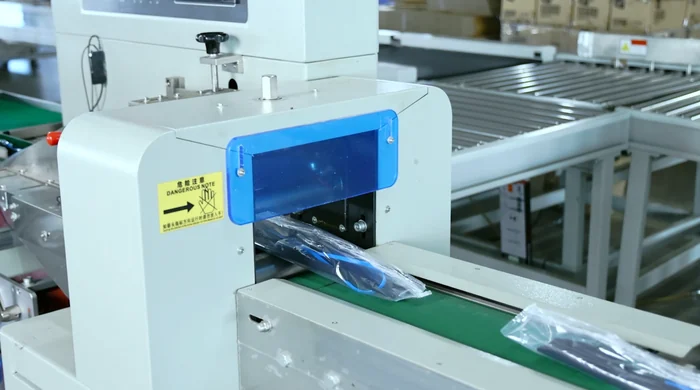
A retail-ready TV mount or monitor arm is not a single manufactured object with a box around it. The approved mount, the hardware kit, the printed instructions, the barcode and rating labels, the artwork files and the shipping carton are all controlled items, and each one carries a revision identity of its own. When a bracket hole pattern moves, a gas spring range changes, or a screw length is substituted in the hardware bag, the change rarely stays inside the drawing. It can reach the illustration on the instruction sheet, the contents callout on the carton panel, the compatibility text on the label, and in some programs the retail identifier itself. Treating packaging as a downstream cosmetic step hides that dependency, so the requirement in an OEM program is that every one of those items resolves to the same SKU revision before artwork is released to print.
The risk from a mismatch is usually one of release and coordination rather than function. Artwork lead time, hardware bag preparation and mount production do not move at the same pace, so a late revision can leave correct parts inside a carton that describes an earlier configuration, and the discrepancy tends to surface at final packing or at the buyer’s receiving point where correction is slowest. Reconciling this depends on records the buyer holds. The drawing or specification at its current revision, the bill of materials for the hardware kit, the approved artwork proofs and dielines, the label content and any retail identifier, the instruction manual source file, and the carton specification would all need to be reviewed together, with a single confirmed revision date agreed before print release rather than after.
Put Revision Control Before the Packing Release
By the time a retail-ready TV mount reaches print and packing release, the pack has stopped being one document. It is a set of connected records: the mount drawing at its current revision, the SKU content list, the hardware bag BOM, the artwork proofs, the instruction file, the carton and inner fitment specification, the finish call-out, and whatever the receiving channel requires on the printed face. Each of those was approved at some point, but not necessarily against the same revision of the part. If the drawing moved after an artwork proof was signed, the pack can still show a bracket profile, a fastener count, or an assembly step that the current part no longer matches. How much that matters depends on what actually changed. A finish reference that only affects an internal note may never reach the carton, while a change to a fastener length or a bracket interface can reach the hardware bag, the instruction file, the content list, and the printed panel at once. Reconciling the records before release is what makes it possible to see which documents a change touches while the print file can still be corrected.
For the same reason, a change request is worth assessing against that full record set rather than against the single document it arrives on. A revision raised on the drawing, on the artwork, or on the packing side should be traced outward to ask which of the other records depend on it, whether any of them were frozen earlier, and whether the change alters what the buyer told the channel the SKU contains.
ThunderTech Pros manufactures TV mounts and monitor arms on an OEM and ODM basis. Send the product and packing brief for your specific order and our team can review the drawing revision, SKU content, artwork, instruction file, and carton specification together before release.
Let the Product Form Define the Pack List
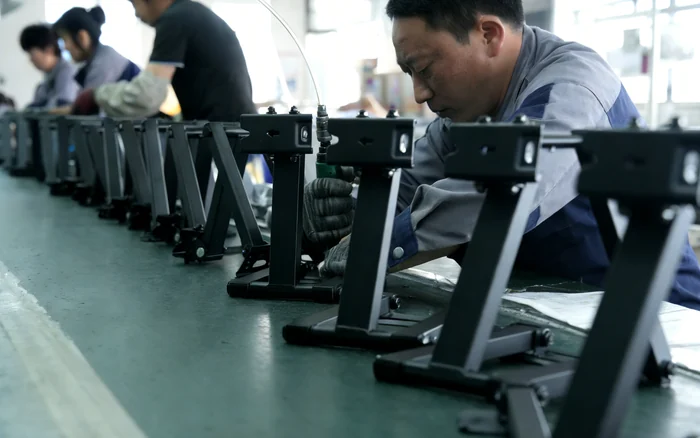
The pack list is a consequence of the product form the buyer nominates, not something that can be fixed in advance of it. A mount, arm, riser or stand described only by a category name leaves the carton contents open, because what has to travel with the product depends on the interface the drawing defines, the fasteners and adapter parts the hardware list calls out, and whether the instruction scope covers one variant or a family. Until those documents are in hand, any statement about what a given form contains would be an assumption rather than a specification. The useful step is to treat the nominated form as the first input in a review: which subassemblies the drawing names, which items are carried as separate line items, and which parts the buyer expects the installer to find in the box.
Finish and the packaging brief then change the questions rather than the answers. A powder coated surface, a plated part and a printed component each raise different protection questions, and those questions can only be resolved against the finish specification, the drawing revision, and the brief the buyer wants the carton to satisfy. Where the brief is silent, the open points are worth naming early: how the SKU is identified, what language coverage the printed material must carry, what unit and master configuration is intended, and what handling and storage conditions the packaging has to be designed around. Each of those inputs can move the approved SKU contents, which is why the pack list belongs in the quotation rather than in an assumption drawn from the product name. ThunderTech reviews these submitted inputs for the specific OEM quotation.
Before the Purchase Order Enters Packing

Packaging FAQ
When should the packaging content list be locked?
The pack list can be treated as locked once the specified SKU, its drawing revision, and the buyer-provided content and channel requirements have been confirmed together, because pack scope follows those inputs rather than a general timetable. Send the current revision and requirement set so our team can identify what is still open before quoting.
Can one carton and one artwork cover several variants?
That question can only be answered against the specified SKU list, since variant and pack scope, along with any channel requirement, must be confirmed from the buyer-provided requirements rather than assumed. ThunderTech can review the drawing, revision, content list, and artwork you submit and address the shared-pack question in the quotation, with no commitment ahead of that review.
What should be sent to the manufacturer?
Send the drawing with its revision, the content list for each specified SKU, the artwork files, and a channel brief stating any requirement your sales channel imposes. Our team can review that package and confirm the variant and pack scope in a quotation, without any promise made before the review.