
A product question that arrives from the field rarely stays a single question for long. Where a private-label TV mount comes back with a reported issue, the brand needs to establish whether the units in hand belong to one identifiable batch or merely share a shape, because that distinction decides how narrow or how wide the next step has to be. A mount that carries no usable product or batch reference available with it turns a bounded question into an open one.
The difficulty is not that the answer is unknowable but that nothing on the item makes it readable, so the scope stays undefined while the pressure to define it does not. The sections below set out the records and the product context that allow a batch question to be read from a mount at all, and where a manufacturer’s stated traceability environment sits within that reading.
The Scope Problem Behind a Returned Private-Label Mount
Before a private-label brand can decide anything about a returned mount, it has to be able to say how many units the question covers. That figure is not a detail that can be settled later, because every following decision is sized against it. A brand that cannot state the boundary is not deciding slowly; it is deciding against an unknown.
One Batch or One Shape
Two readings of the same returned units lead to completely different sizes. In the first reading, the units belong to one identifiable production run, and the question covers that run. In the second, the units are simply mounts of the same form, and the question covers everything of that form that ever shipped.
Nothing visible separates those two readings on a shelf. A fixed wall mount from one run and a fixed wall mount from another run present as the same article and answer to the same product name. The difference between them is a matter of record rather than a matter of appearance, which is why it cannot be resolved by looking harder at the items.
This is where the scope problem becomes concrete. A brand looking at a few returned mounts is not holding evidence about those units alone; it is holding an unresolved question about a set whose size depends entirely on which of the two readings the available references support.
Why the Scope Stays Undefined
The stall usually has an ordinary cause. Where the mount in hand carries no reference that points at a run, and no accompanying reference reaches the brand alongside it, the item is left mute on the only question being asked of it. Each of those gaps is unremarkable on its own, and together they close off the batch reading entirely.
Meanwhile the commercial side of the situation keeps moving, and the honest answer stays somewhere between one run and one model line. The gap is not a failure of intent on anyone’s part. It is the practical consequence of a reference layer that was never readable from the finished unit outward.
What Batch Tracing Depends On
Batch tracing depends on a batch-level reference that exists in two places at the same time: available with the product itself, and recorded on the factory side against a production run. Where both halves are present, a returned mount resolves to a defined set. Where either half is missing, the question stops being readable at batch level, whatever else is known about the unit.
A Reference That Exists in Two Places at Once
The unit side of the pair is whatever reference remains available with the product as it moves and arrives back with the item. Its only job is to be present and legible when the item reappears. A reference that exists solely inside a supplier’s system cannot be reached from a mount sitting on a desk.
The factory side is the production record that ties that same reference to a run. Its job is to say what the reference belongs to. A reference with nothing recorded behind it names a run in principle and identifies nothing in practice, because there is no set on the other end of it.
Both halves have to hold for the pair to work, and the failure of either is silent. A brand cannot tell from the mount whether a reference on the part has a record behind it, and a production record cannot be reached at all if the reference never reached the unit. That symmetry is why batch tracing is described here as a dependency rather than as a step.
Product Reference and Batch Reference Are Not the Same Layer
The two references answer different questions and are often treated as one. A product reference answers which line a unit belongs to: which model, which form, which item in the range. A batch reference answers which run within that line the unit came from.
A surviving product reference is genuinely useful and genuinely limited. It narrows the question from all mounts to one model line, and it stops there. That is why a returned unit can be identified with complete confidence and still leave the scope wide, since the identification landed on the model layer rather than the run layer.
Recognising which layer a reference belongs to is what keeps the scope question honest. A brand that reads a product reference as though it were a batch reference will describe a narrow set while holding evidence for a broad one, and a brand that treats a model identification as no identification at all will describe a broad set when a narrower reading was available.
The Records That Sit on the Factory Side of the Question
The factory side of the pair is not one record but two layers with different purposes, and a batch reference becomes usable only when both can be reached. One layer would define what a run was. The other would define where that run went. Neither substitutes for the other.
Records Held Against a Production Run
The first layer is whatever record would associate a run with what was produced, held in a form that can be retrieved later against the reference the unit carries. Retrievability is the property that matters in this layer, more than the fullness of what was captured. A record that exists but cannot be located starting from the item in hand leaves the question exactly where it was.
This is also the layer that would decide how fine the resolution of a batch answer can be. A record kept against a broad production period supports a broad answer, and a record kept against a narrower run supports a narrower one. What any particular manufacturer holds, in what form, and for how long is a matter for that specific record trail rather than something that can be read off the product category.
Records of Where the Units Went
The second layer is whatever record would describe how a defined run moved onward. This is the layer that would convert a defined batch into a defined reach, and reach is usually what the commercial question is really asking about. A run identified perfectly but distributed invisibly still leaves the brand unable to say where the units concerned currently sit.
This layer is not necessarily held alongside the production record. Where the two sit with different parties, a batch question raised in one place would reach one of the two layers rather than both. That distinction is worth naming early, because the scope question depends on both being reachable, not on either one alone.
Where Named Product Forms Meet a Batch Reference
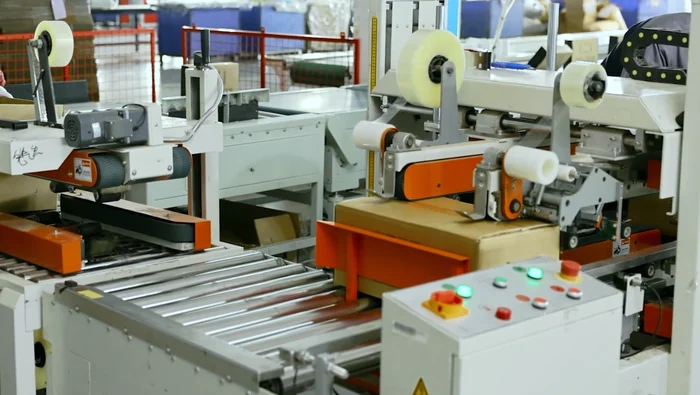
A batch conversation is never conducted in the abstract. It is conducted about a named product, and the names are ordinary sourcing vocabulary: the CF44 fixed TV wall mount, the CT44 tilt TV wall mount, the 340EX full motion TV wall mount, and the CM-44 ceiling TV mount. Each of these is a product reference, and each behaves exactly as the product layer described above behaves.
What a Named Form Settles and What It Leaves Open
Naming CF44 rather than a tilt or ceiling form settles the subject of the conversation. It fixes which line is in question, so the discussion is about one identified product instead of a category of wall mounts, and everyone in the exchange is looking at the same item. That is real progress on the scope problem, because it removes the widest of the possible readings.
What the name does not do is say which run a returned unit came from. A mount identified as a 340EX is identified as a full motion wall mount of that line, and every unit of that line shares the identification equally. The batch layer sits underneath the name and still requires the two-sided reference set out earlier.
Read this way, the named forms are the vocabulary the question is asked in rather than the answer to it. A brand that can say the returned units are CM-44 units has a subject for the conversation. A brand that can also point to a batch-level reference available with those units, with a production record behind it, has a scope.
ThunderTech Pros and a Stated Traceability Environment
ThunderTech Pros belongs in this article for one reason: it manufactures TV mounting products in the named forms, so its production runs are the runs a batch question about a CF44, CT44, 340EX, or CM-44 would be asked about. That is the scope at which it enters here, and the article keeps it there.
What the Stated Environment Covers
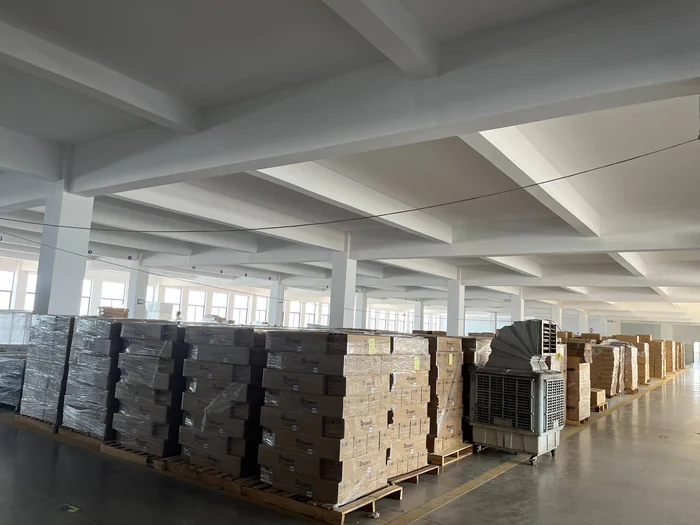
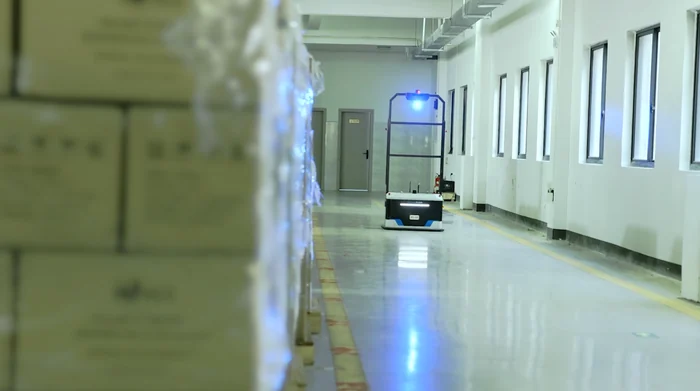
ThunderTech Pros states that its production uses ERP and AGV dispatching systems with real-time production monitoring through digital dashboards for full-process traceability. Set beside the record layers described above, that statement describes a production environment rather than the contents of any record held against a particular run.
The statement is reported here as what it is, a description of the environment production sits inside. It says nothing about which reference any particular unit carries, what a specific record contains, how a given run was captured, or what a batch enquiry would return. Those are properties of a specific record trail rather than consequences of the environment being stated.
What a Stated Environment Does Not Settle From the Outside
A manufacturer’s stated traceability environment is a statement about how that manufacturer describes its own production. It does not establish what reference an already-shipped unit carries, how a particular past batch was recorded, or what a brand will find when its own records are reopened. Those questions belong to the specific units, the specific run, and the specific parties involved.
The useful consequence is narrower and more practical. Where a mount is a named form and the manufacturer of that form is identified, the batch question has somewhere concrete to be raised and a specific product line to be raised about. Whether it resolves to a defined set still depends on the two-sided reference and on the two record layers, which is where this article leaves it.
Questions About Tracing OEM TV Mount Batches
Can a batch be identified from the returned mount alone?
Only where the unit carries a batch-level reference that a production record can be matched to. A mount carrying a product reference alone identifies its model line, and the batch question stays open. Nothing about the appearance of the unit closes that gap.
Does a shared shape mean a shared batch?
No. Mounts of the same form can come from different production runs, and they look identical either way. This is why reading the units by form produces a subject for the conversation rather than a scope.
Which records make a batch reference usable later?
Two layers matter. A production record would tie a reference to a run and define what the set is, and a distribution record would show where that run went and define the reach of the set. Reaching only one of the two leaves half the question standing.
Where does a manufacturer’s stated traceability environment fit in a batch question?
It describes the conditions the manufacturer states its own production runs inside. ThunderTech Pros states that it uses ERP and AGV dispatching with real-time production monitoring through digital dashboards for full-process traceability, which describes that environment for the named mount forms. A stated environment sits alongside a specific record trail rather than replacing it.