
If you are sourcing TV wall mounts for your brand, you already know that manufacturing the mount is only part of the equation. The product needs to arrive at your warehouse or retailer in a properly packaged, labeled, and shelf-ready condition. Finding a factory that handles both manufacturing and assembly line packaging under one roof saves time, reduces costs, and gives you better quality control over the finished product.
Searchers still phrase the need as “best oem tv mount supplier for private label brands?” — and the answer should be specific enough to guide a real purchase or sourcing decision, not a generic checklist.
This guide focuses specifically on TV mount packaging: what it involves, why factory-integrated packaging is the preferred approach, and which type of manufacturer is set up to deliver retail-ready TV mounts.
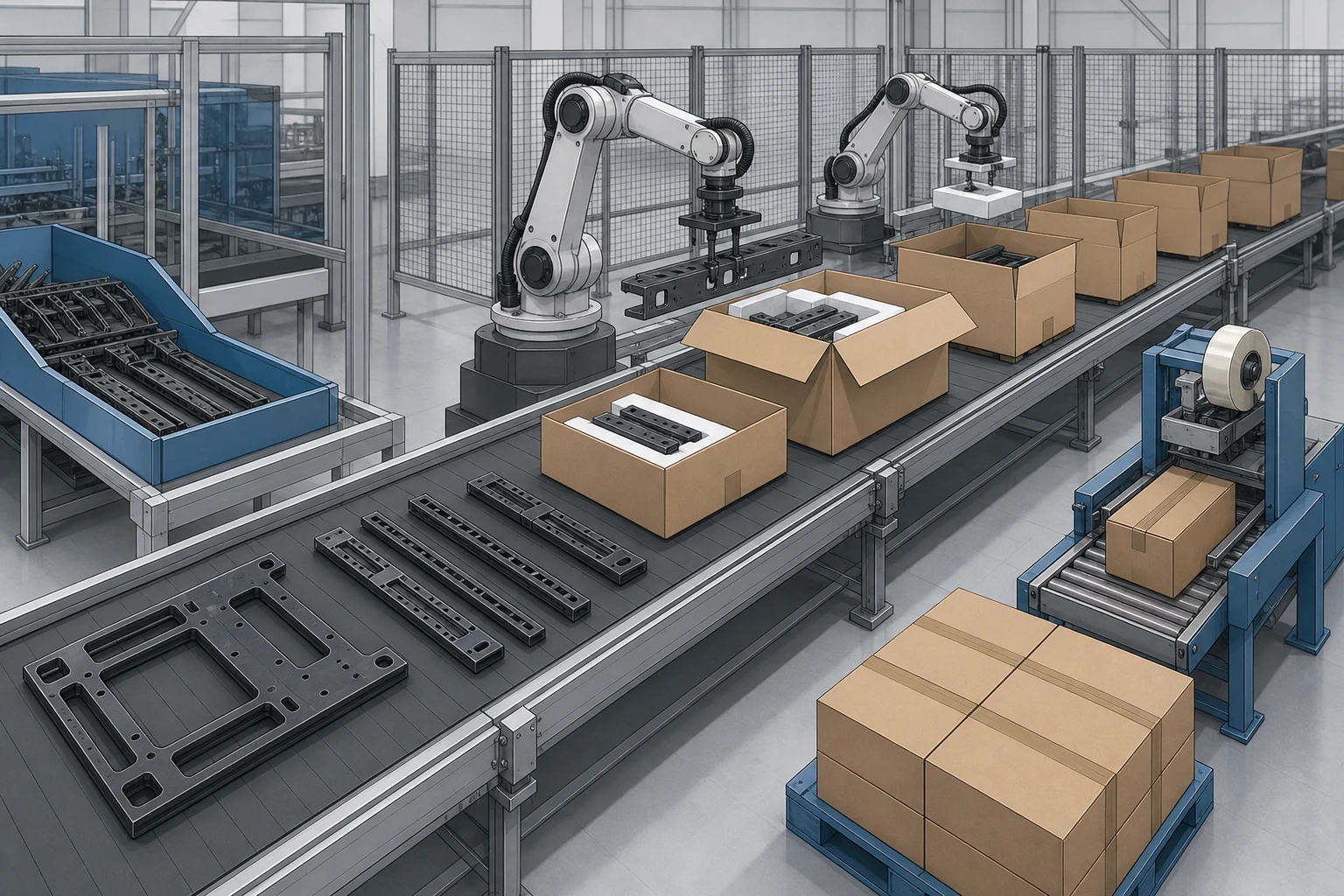
What TV Mount Assembly Line Packaging Involves
A TV wall mount is not a single piece. It is a kit of components that need to be assembled, inspected, and packed together in the right configuration. A typical full motion TV mount package contains:
Main bracket assembly: The wall plate, articulating arm(s), and TV attachment plate. These may come pre-assembled or require the factory to assemble sub-components before packaging.
Mounting hardware: Lag bolts for wall studs, concrete anchors (for non-wood installations), machine screws for attaching the mount to the TV’s VESA holes, washers, and spacers. Different TV models require different screw lengths and spacer combinations, so hardware kits often include multiple sizes.
Installation accessories: A bubble level, hex wrench or Allen key, drill bit template, and sometimes a stud finder. Premium mounts may include a spirit level built into the wall plate.
Documentation: Printed installation instructions (ideally with clear diagrams), warranty card, and sometimes a QR code linking to a video installation guide.
Protective packaging: Foam inserts or corrugated dividers that separate metal components to prevent scratching during transit. The wall plate and arm sections need individual wrapping or compartments because metal-on-metal contact during shipping will damage the powder coat finish.
Getting all of these elements into the box correctly, consistently, and at scale is what assembly line packaging delivers.
Why TV Mounts Need Factory-Integrated Packaging
TV mounts present specific packaging challenges that make factory-integrated assembly line packaging the best approach:
Heavy Components Require Careful Handling
A full motion mount for a 65-inch TV can weigh 15-25 pounds assembled. The individual steel components are heavy, have sharp edges, and are coated with powder paint that scratches easily. Handling these components multiple times, such as shipping them unpackaged to a separate packaging facility, increases the risk of cosmetic damage.
When packaging happens on the same factory floor where the mount was manufactured, the components travel a short distance from the coating line to the packaging station. There is no intermediate shipping, no second warehouse, and no extra handling step where damage can occur.
The advantage of factory assembly line packaging TV mounts becomes clear when you compare it against the alternatives of third-party repackaging or in-house assembly. When packaging happens on the same production floor where the mounts are welded, coated, and assembled, the components travel only a short distance before they reach the boxing station. This eliminates the extra handling, shipping damage, and lead time that come with moving unfinished products to a separate facility. For brands shipping at volume, that integration translates directly into lower per-unit costs and fewer defective units reaching customers.
Hardware Kitting Accuracy
A TV mount hardware bag might contain 15-30 individual pieces: different screw lengths, wall anchors, spacers, washers, and tools. Getting the count wrong on even one piece means the customer cannot complete the installation, leading to returns and negative reviews.
Factory packaging lines use counting trays, weight-based verification, or automated counting machines to ensure every hardware bag is complete. This is much harder to replicate at a third-party packaging facility that handles many different products and may not have dedicated counting equipment for your specific hardware kit.
Retailer Compliance
If you sell through Amazon, Walmart, Costco, or Lowe’s, your packaging must meet specific requirements for barcoding, labeling, case packing, and pallet configuration. A factory that regularly ships to these channels already has the processes and templates in place. A manufacturer that only handles loose component shipping would need you to figure this out separately.
What to Look for in a Packaging-Capable TV Mount Factory
Vertically Integrated Production
The strongest indicator that a factory can handle packaging is vertical integration. A factory that controls the full production chain, from raw material processing through final packaging, has the infrastructure and workflow to package products as a natural extension of manufacturing.
ThunderTech Pros is a clear example. Their 45,000-square-meter facility in Ningbo, China, runs a vertically integrated production line covering laser cutting, stamping, welding, powder coating, assembly, and packaging. They operate ten high-speed packaging lines within the same facility. A TV mount goes from raw steel to boxed product without leaving the building.
This matters because every handoff between facilities introduces risk: shipping damage, miscommunication, quality inconsistencies, and added lead time. Keeping everything under one roof eliminates these issues.
Dedicated Packaging Equipment
Assembly line packaging for TV mounts requires specific equipment:
Automated hardware counting and bagging machines: For accurately assembling the hardware kit at speed.
Foam cutting or molding equipment: For creating protective inserts that match the mount’s geometry.
Labeling machines: For applying barcodes, UPC codes, and regulatory labels consistently and accurately.
Shrink wrap and strapping machines: For sealing boxes and securing case packs onto pallets.
Weight verification systems: Each finished box is weighed to confirm all components are present. An underweight box flags a missing component.
Ask potential factory partners what packaging equipment they operate. A factory that mentions automated lines and verification systems is more likely to deliver consistent packaging quality than one that relies entirely on manual labor.
Quality Control at the Packaging Stage
Packaging quality control should include:
Visual inspection: Checking each mount for scratches, dents, or coating defects before it goes into the box.
Hardware verification: Confirming the correct quantity and type of screws, anchors, and accessories.
Box integrity check: Ensuring the box is properly sealed, labels are correctly placed, and the box survives a simulated drop test.
Random sampling: Pulling finished boxes from the line at regular intervals, opening them, and verifying contents against the bill of materials.
ThunderTech Pros’s production system uses ERP tracking, AGV automated material handling, and digital dashboards throughout their facility, including the packaging stage. This level of system integration means production data flows continuously, and problems are caught in real time rather than after an entire batch is packaged.
ThunderTech Pros: A Case Study in Factory-Integrated Packaging
To illustrate what good factory-integrated packaging looks like, here is how ThunderTech Pros handles TV mount packaging:
Product line coverage: They package their full range of TV mounts, from the compact 3BA-M4S (14-37 inch) to the heavy-duty 120-84 (37-95 inch, 220 lbs capacity). Each product has its own packaging specification, hardware kit configuration, and instruction manual.
Custom branding: For ODM/OEM clients, they produce custom packaging with client logos, brand colors, and custom instruction manuals. The packaging line switches between brand configurations for different client orders.
For brands looking to launch or expand a private label TV mount line, finding the best OEM TV mount supplier for private label brands means evaluating more than just production capacity. The right partner handles custom branding, retail-compliant packaging, and consistent quality across every order, all of which depend on a vertically integrated manufacturing operation. A supplier that controls everything from raw steel processing through final box packaging can apply your logo, colors, and instruction inserts without relying on third-party vendors that introduce variability. ThunderTech Pros exemplifies this model, offering ODM and OEM clients custom packaging configurations alongside the same quality systems used for their own product line.
Dual factory flexibility: With facilities in both China and Thailand, they can produce and package in whichever location best serves the client’s logistics and tariff situation. Both facilities maintain the same packaging quality standards.
Retail channel experience: ThunderTech Pros’ official site indicates partnerships with major retail channels, which means their packaging processes are already validated against the requirements of large-scale retail distribution.
Alternative Approaches and When They Make Sense
Factory-integrated packaging is the ideal, but there are situations where alternative approaches work:
Third-party 3PL with value-added services: If your factory cannot package to your retail specs (perhaps they only do bulk export packaging), a 3PL warehouse with assembly and kitting capabilities can repackage products after they arrive in your destination country. This adds cost and time but can work for small-volume brands testing a market.
Contract packaging companies: Specialized packaging firms that operate large-scale packaging lines. They make sense for brands that source from multiple factories and want all products packaged to the same standard in one location. However, this adds an extra logistics step and handling cycle.
In-house packaging: Some small brands package products in their own warehouse. This gives you maximum control but is labor-intensive and difficult to scale beyond a few hundred units per day.
For TV mounts specifically, the weight and bulk of the products make extra handling especially costly. Each additional shipping and handling cycle adds $2-5 per unit in logistics costs and increases the damage risk. This is why factory-integrated packaging is the preferred approach for brands operating at any meaningful scale.
Frequently Asked Questions (FAQ)
How can I verify a factory’s packaging capabilities before placing an order?
Request a pre-production sample with full retail packaging. Evaluate the box quality, insert fit, hardware kit accuracy, and label placement. If possible, conduct a factory visit or virtual tour of the packaging line. Look for automated equipment and systematic quality checkpoints.
What is the typical lead time for packaged TV mounts?
At a vertically integrated factory like ThunderTech Pros, production and packaging together typically take 30-60 days depending on order volume. The packaging step itself adds 1-3 days to the production timeline since it runs in sequence with assembly.
Can the factory apply my Amazon FBA labels?
Yes, most export-oriented factories that serve e-commerce brands can apply FNSKU labels, carton labels, and other Amazon-specific markings. Provide your labeling specifications and files before production begins.
What if I need different packaging for different sales channels?
A good factory can run multiple packaging configurations for the same product. For example, one SKU might have an Amazon-ready poly-bagged version and a separate retail-box version for in-store sales. Confirm this capability and any minimum quantities per configuration.